Dog Scent Work at Home: Easy Start Guide
Scent work for dogs at home is a highly beneficial activity that provides exceptional mental stimulation, reduces stress and anxiety, and strengthens the bond between you and your canine companion—all while requiring minimal physical space and equipment. In fact, just 10-15 minutes of focused scent work can mentally tire your dog as much as a 30-60 minute walk, making it an ideal enrichment activity for dogs of all ages, breeds, and physical abilities.
Veterinary Disclaimer
Important Medical Notice: While scent work is generally safe and beneficial for dogs, this article is for informational purposes only and does not replace professional veterinary advice. If your dog has respiratory issues, anxiety disorders, or any health concerns, consult your veterinarian before beginning scent work training. Never use concentrated essential oils without proper safety protocols, and always monitor your dog for signs of distress or adverse reactions during training sessions.
What Is Scent Work for Dogs at Home?
Scent work, also known as nose work, is a canine enrichment activity that taps into your dog’s most powerful sense—their nose—by challenging them to locate specific scents or hidden objects. According to the American Kennel Club (AKC), this activity transforms your dog’s natural sniffing instinct into a structured game that provides profound mental stimulation and builds confidence.
At home, scent work can range from simple treat-finding games to more advanced essential oil detection exercises. Your dog uses their incredible olfactory capabilities (which include approximately 300 million scent receptors compared to our mere 6 million) to:
- Search for hidden treats or toys
- Discriminate between different scents
- Indicate when they’ve found the target odor
- Problem-solve through increasingly complex challenges
The beauty of home-based scent work is its accessibility—you don’t need a large yard, expensive equipment, or specialized training to get started. You can practice in apartments, small rooms, or outdoor spaces, making it perfect for any living situation.
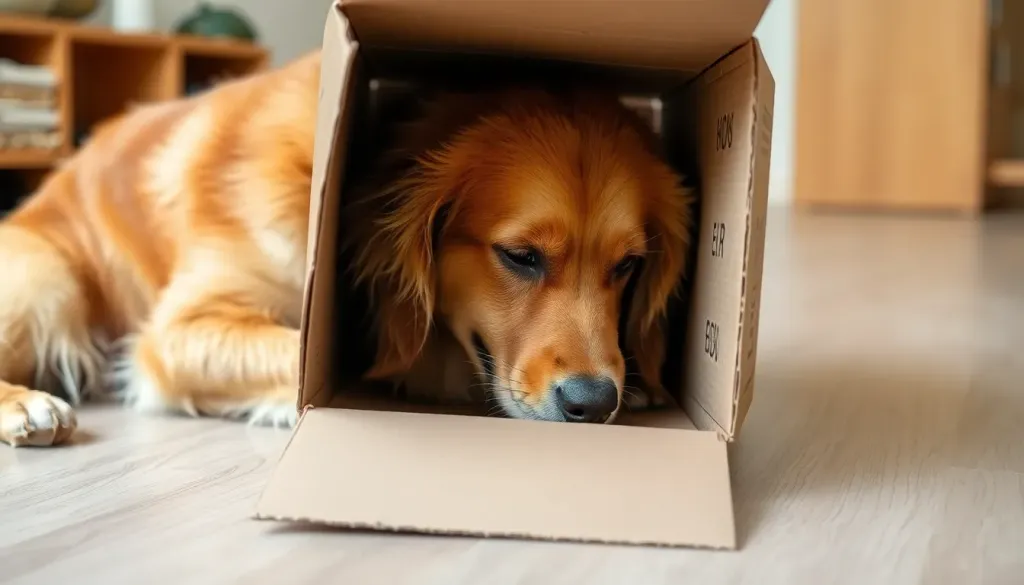
The Science Behind Why Dogs Love Scent Work
Understanding Your Dog’s Olfactory Power
Dogs experience the world primarily through their nose. When your dog sniffs, they’re not just detecting smells—they’re gathering detailed information about their environment, processing memories, and engaging the largest part of their brain dedicated to scent analysis.
Key facts about canine scent ability:
- Dogs can detect some odors at concentrations 100 million times lower than humans can
- Their olfactory cortex is 40 times larger than ours (relative to brain size)
- They possess a secondary olfactory system (Jacobson’s organ) that processes pheromones
- Sniffing creates a unique brain wave pattern associated with calm, focused attention
This biological design makes scent work deeply satisfying for dogs—it’s like giving them the opportunity to read the most fascinating book or solve the most engaging puzzle tailored specifically to their natural abilities.
Comprehensive Health Benefits of Scent Work for Dogs at Home
Mental Stimulation & Cognitive Function
According to PetMD, scent work acts as a complex mental puzzle that engages multiple cognitive processes simultaneously. Here’s what happens in your dog’s brain during a scent work session:
Cognitive Benefits Table:
| Brain Function | How Scent Work Engages It | Observable Benefit |
|---|---|---|
| Memory | Recalls previous hide locations and successful strategies | Improved retention and learning speed |
| Problem-Solving | Determines the most efficient search pattern | Enhanced decision-making abilities |
| Focus & Concentration | Maintains attention on scent discrimination task | Reduced impulsivity and better impulse control |
| Sensory Processing | Analyzes complex scent information | Sharper mental acuity, especially in senior dogs |
| Spatial Awareness | Maps the environment while tracking odor | Better navigation and environmental confidence |
Mental fatigue equivalency: Just 10-15 minutes of focused scent work can tire your dog as much as 30-60 minutes of physical exercise. This makes it ideal for:
- High-energy breeds on rainy days
- Dogs recovering from injury
- Senior dogs with reduced mobility
- Puppies who can’t yet handle long walks
Stress & Anxiety Reduction
One of the most remarkable benefits of scent work is its natural calming effect. Research shows that focused sniffing activities:
- Lower heart rate by 10-15 beats per minute
- Reduce cortisol levels (the stress hormone)
- Activate the parasympathetic nervous system (rest and digest mode)
- Provide predictable structure for anxious dogs
For reactive or anxious dogs, scent work offers a constructive outlet that redirects nervous energy into productive focus. The activity gives their brain something specific to concentrate on rather than fixating on triggers or worries.
Real-world application: If you have a dog who becomes anxious during thunderstorms or fireworks, practicing scent work during calm times creates a positive association that can be deployed during stressful events, giving your dog a familiar, confidence-building task to focus on.
Confidence Building for Shy or Fearful Dogs
Success breeds confidence! Each time your dog successfully locates a hidden scent or treat, they experience:
- Accomplishment that builds self-esteem
- Independence in problem-solving without constant human guidance
- Positive associations with exploration and trying new things
This is particularly transformative for rescue dogs, shy puppies, or dogs who’ve experienced trauma. The AKC notes that scent work allows these dogs to work at their own pace, making choices and experiencing success without pressure, which gradually builds their confidence in other areas of life.
Physical Exercise & Health Benefits
While primarily a mental activity, scent work provides surprising physical benefits:
- Low-impact movement suitable for dogs with joint issues or arthritis
- Stretching and flexing as dogs reach into boxes, under furniture, or up onto safe surfaces
- Controlled exercise that doesn’t risk injury from running or jumping
- Muscle engagement in the neck, back, and core while tracking scents
Age-appropriate advantages:
- Puppies (8 weeks+): Builds physical coordination and spatial awareness safely
- Adult dogs: Maintains muscle tone and flexibility
- Senior dogs: Provides gentle exercise without joint stress
- Dogs with mobility limitations: Offers engagement without demanding full mobility
Strengthening Your Bond
Engaging in scent work together creates a unique partnership where:
- Your dog learns to work collaboratively with you
- You learn to read your dog’s body language more accurately
- Shared success creates positive associations with training
- Trust deepens through consistent, rewarding experiences
Patience is key! This activity requires you to slow down, observe, and celebrate your dog’s natural abilities rather than commanding specific behaviors, which creates a different, more cooperative dynamic than traditional obedience training.
Energy Release & Behavior Management
According to behavioral specialists, many common “problem behaviors” stem from insufficient mental stimulation rather than deliberate disobedience:
| Behavior Issue | How Scent Work Helps |
|---|---|
| Excessive barking | Redirects vocal energy into focused sniffing |
| Destructive chewing | Satisfies need for mental engagement |
| Counter surfing | Channels foraging instinct into appropriate outlets |
| Hyperactivity | Burns mental energy effectively |
| Attention-seeking | Provides structured engagement time |
| Restlessness at night | Tires the brain before bedtime |
Understanding the Risks: Safety First in Scent Work
While scent work is generally safe, responsible pet parents must understand potential hazards to prevent harm.
Essential Oil Toxicity: Critical Safety Information
The ASPCA warns that concentrated essential oils pose serious risks to pets. Here’s what you need to know:
Toxicity Risk Table:
| Oil Concentration | Risk Level | Safe Usage |
|---|---|---|
| 100% Pure Essential Oil | HIGH - Never apply directly or allow access | Only with proper containment and ventilation |
| Highly Diluted in Container | MODERATE - Monitor for reactions | Acceptable for advanced scent work with safety protocols |
| Diffused in Air | LOW to MODERATE - Depends on ventilation | Use only in well-ventilated areas, never in small enclosed spaces |
Symptoms of essential oil exposure in dogs:
- Unsteadiness or difficulty walking
- Depression or lethargy
- Drooling or pawing at mouth
- Low body temperature
- Tremors or muscle weakness
- Vomiting and diarrhea (if ingested)
- Respiratory distress
You can do this! Safe essential oil use requires discipline, but following proper protocols (detailed below) makes advanced scent work completely safe.
Improper Handling Protocols
To prevent contamination and toxicity when using essential oils for scent work:
MUST-FOLLOW SAFETY STEPS:
- Always wear disposable gloves when handling essential oils
- Use tweezers to manipulate cotton swabs with oil
- Apply only 2 drops to the cotton swab
- Store oils in sealed glass jars with drilled ventilation holes
- Dispose of contaminated materials (gloves, swabs) in sealed plastic bags in outdoor trash
- Wash hands thoroughly after handling oil containers
- Keep all oils in locked storage away from pet access
- Never leave scent vessels unattended where dogs can access them directly
Scent Overwhelm & Irritation
Dogs possess 300 million olfactory receptors compared to our 6 million. What smells mild to you can be overwhelming or even painful to your dog.
Warning signs your dog is overwhelmed by scents:
- Sneezing or excessive snorting
- Backing away from the scent source
- Pawing at their nose or face
- Shaking their head repeatedly
- Refusing to search or showing avoidance behaviors
- Excessive eye watering
Action step: If you observe any of these signs, immediately remove the scent source and ventilate the area. For future sessions, use less odor intensity or switch to food-based scent work.
Choking Hazards & Physical Safety
When setting up scent work activities:
- Size treats appropriately for your dog’s breed and age
- Avoid small objects that could be swallowed (buttons, coins, small toys)
- Supervise puzzle toys to ensure pieces aren’t destroyed and eaten
- Check hide locations for sharp edges, unstable items, or hazardous materials
- Clear the search area of household chemicals, medications, or toxic plants
Managing Frustration & Arousal
Patience is key! Some dogs become frustrated when scent work is too challenging, while others become over-excited.
Signs of negative arousal:
- Frantic, unfocused searching
- Barking or whining persistently
- Giving up and walking away
- Destructive behavior (ripping boxes, knocking over items)
- Aggressive guarding of found treats
Solution: Always end sessions while your dog is still successful and engaged. Keep difficulty appropriate to their skill level, and gradually increase complexity only when they’re consistently successful at the current level.
Getting Started: Beginner Scent Work for Dogs at Home
Essential Supplies for Your First Sessions
The great news: You probably already have everything you need!
Basic starter kit:
- High-value treats (small, smelly, and easily consumed)
- 3-5 cardboard boxes of varying sizes
- Clean towels or blankets
- Muffin tin and tennis balls (optional but fun!)
- Toys your dog loves
- Your enthusiasm and patience
For advanced training (later):
- Small glass jars with lids (baby food jars work perfectly)
- Cotton swabs
- Disposable gloves
- Tweezers
- Essential oils (birch, anise, or clove—purchased from scent work suppliers)
- Drill with small bit (to create ventilation holes in containers)
Step-by-Step: Your First Scent Work Session
Session 1: Building Foundation & Enthusiasm
Duration: 3-5 minutes maximum Location: Quiet room with minimal distractions Goal: Create positive association with searching
-
Show your dog a high-value treat (something they go crazy for—cheese, hot dog pieces, freeze-dried liver)
-
With your dog watching, place the treat in an easy, visible location (on the floor, in plain sight)
-
Use your search cue (choose one and stick with it: “Find it!”, “Search!”, or “Seek!”)
-
Celebrate enthusiastically when your dog goes to the treat—verbal praise, excitement, maybe a second treat!
-
Repeat 3-4 times in slightly different visible locations
-
End the session on a successful find while your dog still wants more
You can do this! This first session is all about making searching the most exciting game ever. Your enthusiasm is contagious!
Session 2: Introducing Simple Hides
Duration: 5 minutes Prerequisite: Your dog eagerly searches for visible treats
-
Place a treat partially hidden (under a corner of a towel, inside a shallow cardboard box)
-
Give your search cue and allow your dog to investigate
-
Resist the urge to help! Let your dog problem-solve—even if it takes a minute
-
Celebrate success extravagantly—this was harder work!
-
Gradually increase difficulty: Deeper in the box, fully under the towel, behind a chair leg
-
Do 5-6 hides at increasing difficulty levels
-
Always end successfully—if your dog struggles, make the last hide super easy
Intermediate Progression: Multiple Rooms & Elevated Hides
Week 2-3 Training Goals:
Once your dog understands the basic game (usually after 4-6 successful sessions), start expanding:
Progression checklist:
- ✓ Hide treats in multiple locations in one room (start with 2-3, build to 5-6)
- ✓ Use different types of containers (plastic boxes, paper bags, metal tins)
- ✓ Elevate hides to safe, accessible heights (on low furniture, bottom stairs)
- ✓ Expand to multiple rooms (start with adjacent rooms, then different floors)
- ✓ Increase the distance between hides
- ✓ Practice in different environments (garage, basement, fenced yard)
Pro tip: When expanding to outdoor spaces, start in a confined area like a small fenced yard. Wind, weather, and wildlife scents make outdoor scent work significantly more challenging!
Advanced Home Scent Work: Essential Oil Training
When to advance: Only after your dog has mastered food-based searches for at least 4-6 weeks and consistently finds 5+ hides with enthusiasm.
Why essential oils? Unlike food, essential oils don’t diminish in scent strength over time, making them ideal for consistent training and more closely mimicking professional detection work.
Step-by-step essential oil introduction:
Preparation Phase:
-
Order beginner-safe essential oils (birch, anise, or clove from scent work suppliers—never use aromatherapy oils)
-
Create scent vessels:
- Take small glass jars with metal lids
- Drill 3-4 small holes (1/8 inch) in the lid for ventilation
- Ensure edges are smooth (no sharp metal)
-
Prepare your first scent source:
- Wear disposable gloves
- Using tweezers, hold a cotton swab
- Apply exactly 2 drops of birch essential oil to the swab
- Place swab inside glass jar and seal
- Dispose of gloves in sealed bag in outdoor trash
Training Phase:
Session 1: Pairing Food with Scent
-
Place scent vessel in a cardboard box with several high-value treats (not touching the vessel)
-
Give your search cue and allow your dog to find the box
-
Reward heavily when your dog investigates the box (even if they’re drawn by treats initially)
-
Repeat 5-6 times in different locations, always pairing the new scent with food rewards
Session 2-5: Gradual Food Reduction
-
Continue pairing but reduce treats from several to just one or two near the vessel
-
Watch for your dog’s “alert behavior”—how they naturally indicate they’ve found something (sitting, pawing, staring, barking)
-
Mark and reward that alert immediately with treats from your pocket
-
After 3-4 successful sessions, remove treats from hides entirely and reward from your pocket only
Advanced Scent Work: Once your dog alerts reliably to one scent, you can:
- Introduce a second odor (creating scent discrimination challenges)
- Hide vessels in more challenging locations
- Create “blank” boxes with no scent (teaching indication precision)
- Work in outdoor environments with complex scent pictures
DIY Scent Work Games: Creative Enrichment Ideas
The Muffin Tin Game
Difficulty: Beginner Mental effort: Moderate Setup time: 2 minutes
How to play:
- Place a treat in 2-3 cups of a muffin tin
- Cover ALL cups with tennis balls
- Let your dog figure out which balls to remove
- Gradually increase to all 12 cups with treats in only 3-4
Mental challenge: Your dog must distinguish between cups with and without treats while problem-solving how to remove balls.
Cardboard Box City
Difficulty: Beginner to Intermediate Mental effort: High Setup time: 5 minutes
How to play:
- Collect 5-10 cardboard boxes of different sizes
- Arrange them in a room (some open, some closed, some nested)
- Hide treats in 3-4 boxes
- Let your dog systematically search through the “city”
- Increase difficulty by closing boxes with flaps
Variation: Cut holes in boxes so your dog must reach inside, adding a physical problem-solving element.
The Towel Burrito
Difficulty: Beginner Mental effort: Moderate Setup time: 1 minute
How to play:
- Lay a towel flat and place treats along it
- Roll the towel loosely
- Let your dog unroll it to find treats
- Increase difficulty by rolling tighter or adding multiple towels
Benefits: Teaches patience and gentle manipulation rather than frantic tearing.
Treat Trail Adventure
Difficulty: Beginner (perfect for shy dogs) Mental effort: Low to Moderate Setup time: 3 minutes
How to play:
- Create a trail of treats leading to a “jackpot” (bigger pile or special toy)
- Start with treats close together
- Gradually space them farther apart
- Eventually hide the trail treats (under rugs, behind furniture legs)
Confidence building: This game is ideal for building confidence in timid dogs as there’s constant reward and low pressure.
The Shell Game
Difficulty: Intermediate to Advanced Mental effort: High Setup time: 1 minute
How to play:
- Use three cups or containers
- Let your dog watch you place a treat under one
- Slowly shuffle the cups
- Let your dog indicate which cup holds the treat
- Increase shuffling complexity as they improve
Cognitive benefit: This teaches concentration, memory, and inhibits impulsive guessing.
Scent Work Training Guide by Dog Size, Age & Ability
Puppies (8 Weeks to 6 Months)
Physical capabilities: Limited attention span, still developing coordination Ideal session length: 2-3 minutes, 2-3 times daily Best activities: Visible treats, simple boxes, towel hides
Puppy-specific guidelines:
- Keep everything at ground level (no elevated searches yet)
- Use extremely high-value treats (puppy attention is short!)
- Celebrate every tiny success enthusiastically
- Stop before they lose interest
- Avoid essential oils entirely (use food scents only)
- Incorporate socialization by having different family members hide treats
Developmental benefits for puppies:
- Builds confidence during critical socialization period
- Creates positive associations with problem-solving
- Channels mouthing/chewing instinct productively
- Provides safe indoor exercise during vaccination period
Small Breed Dogs (Under 25 lbs)
Physical capabilities: Excellent, but may need access assistance Ideal session length: 5-10 minutes Considerations: Accessibility, treat size, container scale
Small breed adjustments:
- Use smaller containers that they can easily manipulate
- Place hides within their comfortable reach (avoid high shelves unless there’s safe access)
- Use tiny treats appropriate to their mouth size
- Consider their confidence—some small breeds are bold, others need encouragement
- Create smaller search areas so they don’t become overwhelmed
Perfect activities: Muffin tin game, small cardboard boxes, treat trails, towel burritos
Medium to Large Breed Dogs (25-80+ lbs)
Physical capabilities: Excellent strength and reach Ideal session length: 10-15 minutes Considerations: Strength (sturdy containers needed), reach, energy level
Large breed guidelines:
- Use sturdy containers they won’t accidentally destroy
- Take advantage of their height (safe elevated hides)
- Provide more complex multi-room searches
- May progress faster through skill levels
- Ensure adequate space for comfortable searching
Energy management: Large, high-energy breeds (Retrievers, Shepherds, Sporting breeds) benefit enormously from scent work as it channels their drive constructively.
Senior Dogs (7+ Years, Depending on Breed)
Physical capabilities: May have reduced mobility, hearing, or vision Ideal session length: 5-10 minutes with rest breaks Benefits: Mental stimulation without physical stress
Senior-specific adjustments:
- Keep all hides at ground level or easily accessible
- Use especially smelly treats (sense of smell remains strong but needs stronger scents)
- Allow more time for searching—don’t rush them
- Provide soft surfaces for comfort during extended sniffing
- Adjust difficulty down if they seem frustrated
- Consider arthritis—avoid hides requiring awkward positions
Health benefits for seniors:
- Combats cognitive decline (doggy dementia/CCD)
- Provides exercise for dogs with arthritis or hip dysplasia
- Maintains quality of life and engagement
- Builds confidence despite physical limitations
You can do this! Senior dogs often excel at scent work because they’re calmer and more focused than their younger counterparts!
Dogs with Special Needs
Deaf dogs: Scent work is PERFECT as it doesn’t rely on auditory cues. Use hand signals for “search” command and visual markers for success.
Blind or vision-impaired dogs: Scent work provides independence and confidence-building. Keep search areas safe and obstacle-free. Use consistent locations initially.
Mobility-limited dogs: Perfect activity for dogs with injuries, recovering from surgery, or with chronic conditions. Keep hides within their comfortable range of motion.
Reactive or anxious dogs: Scent work provides structured focus that redirects nervous energy. Practice in quiet, controlled environments initially.
Building a Progressive Training Schedule
Week 1: Foundation Building
Goal: Create enthusiasm for searching
Monday/Wednesday/Friday:
- 3-5 minute sessions
- Visible treats only
- 4-5 hides per session
- Same room each time
Tuesday/Thursday/Saturday:
- 5 minute sessions
- Partially hidden treats
- Introduce different containers
- Still same room
Sunday: Rest day (mental recovery is important!)
Week 2-3: Expanding Difficulty
Goal: Increase challenge and search areas
Daily sessions (once per day):
- 5-7 minute sessions
- Fully hidden treats
- 5-8 hides per session
- Expand to 2-3 rooms
- Introduce elevation (safe, low surfaces)
Week 4-6: Mastery & Consistency
Goal: Reliable searching behavior in varied environments
Sessions (5-6 per week):
- 10 minute sessions
- Multiple rooms/areas
- 8-10 hides
- Various container types
- Begin outdoor work (if applicable)
Week 7+: Advanced Skills or Essential Oil Introduction
Option A: Continue advancing food-based work
- Extremely difficult hides
- Very large search areas
- Outdoor trails and yards
- Multiple distractions present
Option B: Transition to essential oils
- Follow essential oil introduction protocol (detailed above)
- Reduce to 5 minute sessions initially
- Pair new scent with food rewards
- Gradually progress difficulty
Common Mistakes & How to Avoid Them
Mistake #1: Making It Too Hard Too Fast
The problem: Overwhelming your dog leads to frustration and can make them dislike the activity.
The solution: Progress SLOWLY. Your dog should succeed 80-90% of the time. If they’re failing to find hides, the difficulty is too high.
Patience is key! It’s always better to keep things easy for longer than to advance too quickly and create negative associations.
Mistake #2: Sessions Too Long
The problem: Mental fatigue causes your dog to lose focus and enthusiasm, ending sessions on a negative note.
The solution: Keep sessions SHORT—especially for beginners. End while your dog is still engaged and wants more. Five successful finds are better than fifteen finds followed by frustration.
Mistake #3: Insufficient Rewards
The problem: If the reward doesn’t match the effort, your dog won’t stay motivated.
The solution: Use JACKPOT treats—the highest value rewards your dog will work for. Regular kibble won’t cut it for most dogs. Think cheese, meat, or whatever makes your dog’s eyes light up.
Mistake #4: Helping Too Much
The problem: Pointing to hides or guiding your dog prevents them from developing problem-solving skills.
The solution: Let your dog WORK. Even if they take several minutes to find something, resist helping. The mental effort is the point!
Exception: If your dog is truly stuck for 3+ minutes and showing signs of giving up, you can make the hide easier or guide them near it, but don’t point directly at it.
Mistake #5: Inconsistent Search Cues
The problem: Using different words confuses your dog about what you’re asking.
The solution: Choose ONE search cue (“Find it!”, “Search!”, “Seek!”) and use it consistently. Everyone in the household should use the same cue.
Mistake #6: Not Observing Your Dog’s Alert Behavior
The problem: Missing your dog’s natural indication means they don’t get rewarded at the right moment.
The solution: Watch carefully for your dog’s “I found it!” behavior:
- Freezing and staring
- Pawing or scratching
- Sitting next to the hide
- Looking back at you
- Circling the area
- Barking or whining
Mark and reward this behavior immediately so your dog learns that alerting you = jackpot reward!
Reading Your Dog: Body Language During Scent Work
Understanding what your dog is communicating during scent work helps you adjust difficulty and ensure they’re having a positive experience.
Positive Engagement Signals
Your dog is enjoying themselves if they show:
- ✓ Tail wagging (loose, relaxed wag)
- ✓ Focused but relaxed body posture
- ✓ Purposeful movement between search areas
- ✓ Brief glances back at you (checking in, not asking for help)
- ✓ Consistent searching without prompting
- ✓ Immediate return to searching after rewards
- ✓ Soft eyes and relaxed facial muscles
Stress or Frustration Signals
Your dog needs a break or easier hides if they show:
- ✗ Tail tucked or completely still
- ✗ Yawning (stress yawn, not tired)
- ✗ Lip licking repeatedly
- ✗ Looking away from search area frequently
- ✗ Walking away or trying to leave
- ✗ Frantic, unfocused movement
- ✗ Whining persistently
- ✗ Giving up and lying down
You can do this! If you see stress signals, immediately make the next hide super easy and reward generously. End the session on that success.
Problem-Solving Body Language
Your dog is engaged in productive thinking if they:
- Systematically checking multiple locations
- Returning to previously investigated areas
- Using air scenting (nose up) and ground scenting (nose down)
- Pausing to process scent information
- Making deliberate choices about where to search next
This is exactly what you want! Even if it takes time, this is valuable cognitive work.
Frequently Asked Questions About Scent Work for Dogs at Home
Can I start scent work with a puppy, and when is too young?
Absolutely! You can begin basic scent work games with puppies as young as eight weeks old. At this age, keep sessions extremely short (2-3 minutes) and use only visible treats scattered on the floor. As your puppy develops, gradually introduce simple containers and partially hidden treats.
The key consideration isn’t age—it’s matching the difficulty to your puppy’s developmental stage. Puppies have short attention spans but incredible learning capacity during their critical socialization period (8-16 weeks). Scent work during this time builds confidence, creates positive problem-solving associations, and provides mental stimulation during the period when physical exercise must be limited due to vaccination protocols.
Never use essential oils with puppies—stick exclusively to food-based scent work until they’re at least 6-8 months old and have mastered the fundamentals. The primary goal with puppies is creating enthusiasm for searching, not advanced skill development.
Patience is key! Your puppy may find three treats and then get distracted by a toy or start zooming around the room—this is completely normal. Simply end the session positively and try again later. Puppies who learn scent work early often develop into exceptional working dogs because the behavior is so deeply ingrained.
How do I know if my dog is overwhelmed by essential oil scents?
Dogs possess olfactory capabilities that are 10,000 to 100,000 times more sensitive than humans, which means scents you barely notice can be overwhelming or even painful for them. According to the ASPCA, monitoring your dog’s reaction to scents is critical for their wellbeing.
Clear signs your dog finds a scent overwhelming:
-
Respiratory distress: Sneezing repeatedly, snorting, or breathing with their mouth open (dogs typically breathe through their nose)
-
Avoidance behaviors: Backing away from the scent source, turning their head away, or refusing to approach the search area
-
Physical discomfort: Pawing at their nose or face, rubbing their nose on the carpet or furniture, excessive eye watering or squinting
-
Behavioral changes: Suddenly stopping their search, appearing anxious or stressed (as described in the body language section above), or showing displacement behaviors like yawning or lip licking
-
Searching without success: If your dog is clearly detecting something but won’t commit to an alert, the scent may be so strong it’s confusing their ability to pinpoint the source
Immediate action steps if you observe these signs:
- Remove the scent source immediately and ventilate the area
- Take your dog outside for fresh air
- Do not force them to continue searching
- For future sessions, use significantly less essential oil (1 drop instead of 2) or dilute it further
- Consider switching to food-based scent work exclusively
- Ensure proper ventilation during all scent work sessions
Prevention strategies:
- Always train in well-ventilated spaces
- Start with extremely small amounts of essential oil
- Keep concentrated oils stored in sealed containers far from where your dog trains
- Never train in small, enclosed spaces like closets or bathrooms
- Observe your dog’s initial reaction when introducing any new scent
You can do this! Most dogs handle properly prepared essential oil scent vessels without issue, but individual sensitivity varies. Trust your observations and always prioritize your dog’s comfort over training advancement.
What if my dog just eats the treats immediately without searching?
This is actually one of the most common beginner challenges! When dogs are new to scent work, they often don’t understand the “game” yet—they just know there are treats somewhere and they want them NOW.
Here’s your step-by-step solution:
Phase 1: Create the Search Behavior (Days 1-3)
-
Use lower-value treats initially so your dog doesn’t become frantically focused on consumption rather than the process
-
Make hides extremely visible and require just 2-3 steps to reach—your dog should basically see them
-
Mark and reward the APPROACH before they even get the treat—say “Yes!” and give an additional treat from your pocket when they move toward the hide
-
Repeat many times until your dog associates moving toward hides with additional rewards
Phase 2: Slow Down Consumption (Days 4-7)
-
Use containers that slow down access—put treats inside cardboard boxes or under towels so your dog must manipulate objects
-
Reward problem-solving enthusiastically—when your dog uses their paws or nose to open a box, that’s the behavior you want!
-
Make treats larger or use multiple so consumption takes longer, giving you time to praise the searching behavior
**Phase 3: Build Distance (Week 2