Golden Retriever Shedding: Reduce Fur & Manage

Managing Golden Retriever Shedding: A Multi-Dog Parent’s Complete Guide
Yes, Golden Retrievers are moderate to heavy shedders year-round, with two major seasonal “coat blow” events in spring and fall, but their shedding can be effectively managed through consistent grooming, proper nutrition, and strategic home maintenance routines. With the right tools and daily habits, you can significantly reduce the amount of fur covering your furniture, clothes, and floors while keeping your Golden’s coat healthy and beautiful.
🩺 Veterinary Disclaimer
This article provides general information based on veterinary guidelines and research from the American Kennel Club (AKC), PetMD, and ASPCA Pet Insurance. However, every Golden Retriever is unique. If your dog experiences excessive hair loss, bald patches, skin redness, persistent scratching, or other abnormal symptoms, please consult your veterinarian immediately, as these may indicate underlying health conditions requiring professional treatment.
Understanding Why Golden Retrievers Shed So Much
When I first brought my Golden Retriever, Bailey, home, I was completely unprepared for the sheer volume of fur that would become part of our daily life. I’d find golden tumbleweeds rolling across the hardwood floors, fur embedded in the couch cushions, and somehow, dog hair even managed to get into sealed food containers!
Golden Retrievers possess a double coat consisting of a dense, water-resistant undercoat and a longer, silky outer coat. This magnificent coat system evolved to protect them in cold water retrieving conditions, but it also means they shed continuously throughout the year. According to the American Kennel Club (AKC), Golden Retrievers experience two major seasonal shedding events—typically in spring and fall—when they “blow their coat” to adjust to temperature changes.
The Science Behind the Shedding
| Coat Layer | Function | Shedding Pattern |
|---|---|---|
| Undercoat | Insulation and temperature regulation | Heavy seasonal shedding (spring/fall) |
| Outer Coat | Protection from moisture, dirt, and UV rays | Moderate year-round shedding |
During spring, my dogs shed their thick winter undercoat to prepare for warmer weather. In fall, they shed their lighter summer coat to make room for a denser winter layer. These transition periods can last 2-4 weeks, and I’ve learned that ignoring grooming during these times turns my entire house into a fur factory.
How to Manage Golden Retriever Shedding: The Complete Strategy
Managing Golden Retriever shedding isn’t about stopping it—that’s impossible and unhealthy. Instead, it’s about controlling where the fur ends up and maintaining your dog’s coat health. Here’s my comprehensive approach that has transformed our home from a fur-covered chaos zone to a manageable, cleaner space.
1. Establish a Consistent Brushing Routine
This is the single most important strategy. Brushing removes loose hair before it falls onto your furniture, clothes, and floors. According to grooming experts, you should brush your Golden Retriever at least once or twice weekly during normal periods, and daily during heavy shedding seasons.
When Bailey started his spring shed last year, I made the mistake of only brushing him twice a week. The result? Fur everywhere, and when I finally did brush him, I’d fill an entire grocery bag with loose hair in one session. Now I brush daily during peak seasons, and it takes only 10-15 minutes while removing manageable amounts each time.
My brushing schedule:
- Normal months (summer/winter): 2-3 times per week
- Shedding seasons (spring/fall): Daily, without exception
- Location: Always outdoors when possible to contain the hair tornado
2. Use the Right Grooming Tools
Not all brushes are created equal. I learned this the hard way after wasting money on several ineffective tools. Here’s what actually works:
Essential Grooming Tool Kit
| Tool | Purpose | Usage Frequency | Why It Works |
|---|---|---|---|
| Slicker Brush | Removes tangles and loose outer coat | Daily during heavy shedding | Fine wire bristles penetrate deep without damaging skin |
| Undercoat Rake | Targets the dense undercoat | 2-3 times weekly | Long teeth reach through the outer coat to remove dead undercoat |
| Pin Brush | General maintenance and finishing | Daily | Gentle enough for everyday use, distributes natural oils |
| Deshedding Tool | Heavy-duty undercoat removal | Once weekly (cautiously) | Removes significant amounts but can irritate if overused |
Critical warning from my experience: Avoid bristle brushes—they simply glide over the surface without penetrating the thick double coat. Also, be extremely gentle with deshedding tools. I once used one too aggressively on my younger Golden, Luna, and noticed skin redness afterward. PetMD advises using these tools cautiously, as aggressive deshedding can irritate skin and cause hair breakage.
3. Master the Brushing Technique
Here’s my step-by-step process that has proven most effective:
The Effective Brushing Method:
-
Start with the undercoat rake: Work in sections from neck to tail, using gentle, short strokes in the direction of hair growth. Focus on areas where the undercoat is thickest—chest, haunches, and behind the ears.
-
Follow with the slicker brush: This catches any remaining loose hair and works through minor tangles. I use small circular motions, being especially careful around sensitive areas like the belly and inner legs.
-
Finish with the pin brush: This distributes natural skin oils throughout the coat, leaving it shiny and healthy. According to veterinary dermatologists, this oil distribution is crucial for coat health.
-
Check for problem areas: While brushing, I always examine my dogs’ skin for any redness, bumps, parasites, or unusual hair loss—more on this later.
My dogs have learned that brushing time means treats and praise, so they actually look forward to it now. Bailey will grab his brush and bring it to me when he thinks it’s time for grooming!
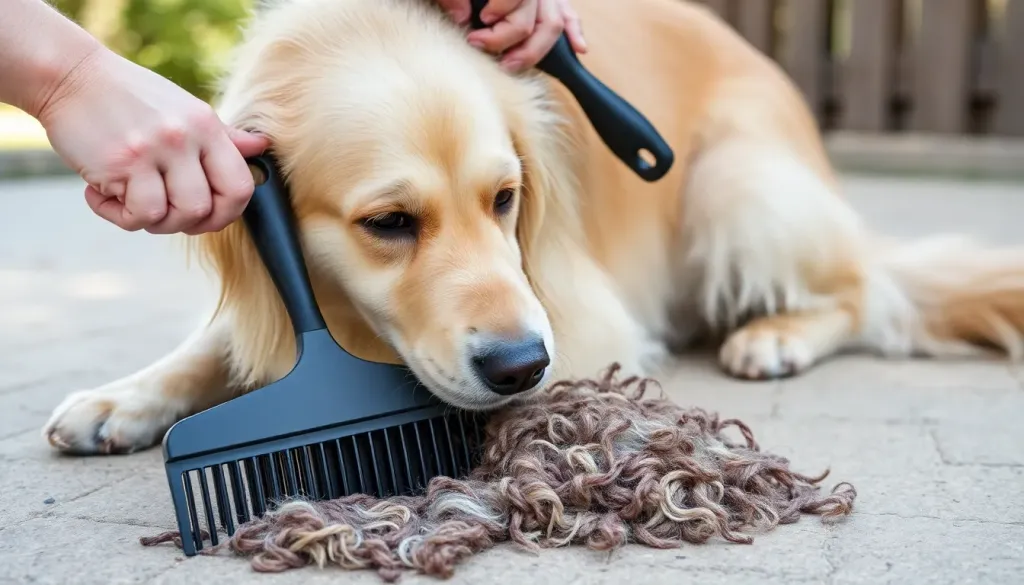
The Power of Professional Grooming
Every 8-10 weeks, I take my Goldens to a professional groomer, and the difference is remarkable. Professional groomers have access to high-powered velocity dryers that literally blow out the loose undercoat in ways home brushing simply cannot match.
What happens during a professional deshedding treatment:
- Specialized bath with shedding-control shampoo that loosens dead hair
- High-velocity drying that forces out embedded loose undercoat
- Professional brushing with commercial-grade tools
- Coat trimming (not shaving!) around paws, ears, and sanitary areas
- Nail trimming and ear cleaning included
After Bailey’s first professional grooming, I was stunned by how much less he shed for the following 2-3 weeks. The groomer showed me an enormous pile of fur they’d removed—easily 3-4 times what I could remove at home. The investment (typically $75-100 in my area) pays for itself in reduced home cleaning time and a noticeably cleaner house.
Strategic Bathing for Shedding Control
Bathing helps loosen and remove dead hair, but there’s a right way and a wrong way to approach it. I bath my Goldens approximately once every 6-8 weeks, or more frequently during peak shedding season.
The Effective Bathing Process
Before the bath:
- Brush thoroughly to remove loose hair and prevent matting when wet
- Use lukewarm water (not hot, which can dry out skin)
During the bath:
- Apply a shedding-control shampoo or oatmeal-based formula—I use products recommended by my veterinarian that contain omega fatty acids
- Massage deeply into the undercoat, not just the outer coat
- Let the shampoo sit for 5-10 minutes (most people don’t do this, but it makes a huge difference)
- Rinse thoroughly—and I mean thoroughly. Leftover shampoo residue can cause skin irritation and increased shedding
After the bath:
- This is crucial: completely dry your Golden Retriever. Moisture trapped in the undercoat creates the perfect environment for skin infections and can actually trap more loose hair
- Use a high-velocity dryer if you have one, or towel dry and then use a regular blow dryer on a cool setting
- Brush again once fully dry to remove any loosened hair
I made the mistake early on of letting Bailey air-dry after baths. Not only did he shed more, but he also developed a musty smell from the damp undercoat. Complete drying is non-negotiable.
Nutrition’s Surprising Impact on Shedding
I didn’t realize how much diet affected shedding until I switched my dogs to a higher-quality food. According to research cited by the ASPCA Pet Insurance, a high-quality diet rich in fatty acids and digestible proteins supports a strong, healthy coat and can decrease excessive shedding.
What to Look for in Your Dog’s Food
When I examined my previous dog food, I discovered it was heavy on fillers like corn and wheat, with protein sources listed far down the ingredient list. After consulting with my veterinarian and researching Golden Retriever-specific nutritional needs, I switched to a formula with:
Optimal Coat-Supporting Ingredients:
- High-quality protein (chicken, fish, or lamb) as the first ingredient
- Omega-3 and Omega-6 fatty acids from sources like fish oil, flaxseed, or salmon
- Biotin and zinc for skin health
- Minimal fillers and artificial additives
Within 6-8 weeks of the diet change, I noticed Bailey’s coat became noticeably softer, shinier, and—most importantly—he shed less. The hair that did shed was stronger and healthier, not the brittle, dull fur I’d been finding everywhere before.
Supplements Worth Considering
After discussing with my veterinarian, I also added:
- Fish oil supplements during peak shedding seasons
- Probiotics for digestive health (healthy gut = healthy coat)
- Coconut oil (small amounts mixed into food or applied topically)
Important: Always consult your veterinarian before adding supplements. Every dog has different nutritional needs, and what works for mine may not be appropriate for yours.
The Critical “Do Not Shave” Warning
This deserves its own section because I’ve seen so many well-meaning Golden owners make this mistake. Never, ever shave your Golden Retriever’s coat. I cannot stress this enough.
When Bailey was going through his first major shed, a neighbor suggested I just shave him down for the summer. I’m so grateful I researched this first, because according to the AKC and veterinary dermatologists, shaving a Golden Retriever’s double coat can cause serious harm:
Why Shaving is Harmful
| Problem | Explanation |
|---|---|
| Disrupts Temperature Regulation | The double coat naturally insulates against both heat and cold. Removing it makes your dog less able to regulate body temperature. |
| Increased Sunburn Risk | The coat provides UV protection. Shaved skin is vulnerable to painful sunburn and increased skin cancer risk. |
| Uneven Regrowth | The coat may grow back patchy, dull, or with altered texture—sometimes permanently. |
| Doesn’t Stop Shedding | Shaving doesn’t stop shedding; your dog will just shed shorter hairs that are even harder to clean up! |
| Damages Hair Follicles | Shaving can damage the hair follicles, leading to long-term coat problems. |
My groomer explained that a Golden Retriever’s coat is like a sophisticated climate control system. In summer, the undercoat thins naturally to allow air circulation, while the outer coat reflects heat and protects from sun. In winter, the dense undercoat provides insulation. Shaving destroys this natural system.
The only acceptable trimming: Light trimming around the paws, ears, tail, and sanitary areas—what professional groomers call a “tidy-up” or “neaten.” This maintains the natural coat structure while keeping your Golden looking neat.
Home Environment Management Strategies
Even with perfect grooming, some fur will inevitably escape. Here’s how I manage the home environment to minimize the visual impact and maintain cleanliness:
Daily Maintenance Routine
What I do every single day:
- Quick vacuum of high-traffic areas (takes 5 minutes with a good cordless vacuum)
- Lint roller on the couch and my favorite chair
- Wipe down hard surfaces with a damp microfiber cloth (catches hair better than dry dusting)
Weekly Deep Cleaning
Saturday morning routine:
- Thorough vacuuming of entire house, including baseboards and corners
- Wash dog beds and their favorite blankets
- Mop hard floors with a damp mop (dry mopping just moves hair around)
- Clean air vents and replace HVAC filters monthly (they get clogged with dog hair fast!)
Strategic Furniture Protection
I’ve learned to work with reality rather than against it:
- Designated dog furniture: My dogs have a specific couch and chair that’s “theirs.” I cover these with washable blankets that I throw in the washing machine weekly.
- No-dog zones: The formal living room and master bedroom are dog-free. This gives us fur-free sanctuary spaces.
- Slip covers: On shared furniture, I use machine-washable slip covers that I can easily remove and clean.
- Hardwood over carpet: When we renovated, I chose hardwood floors over carpet. Fur on hard surfaces is infinitely easier to manage than fur embedded in carpet fibers.
Best Cleaning Tools for Golden Retriever Owners
After trying dozens of products, these are my must-haves:
- Robot vacuum: Runs daily while I’m at work. Life-changing investment.
- Handheld vacuum: For quick spot cleaning and furniture
- Rubber broom: Works better than traditional brooms for gathering dog hair on hard floors
- Lint rollers in bulk: I have them in every room and in my car
- Microfiber cloths: Dampened, they pick up hair like magic
- Pet hair removal tool for laundry: Throw it in the dryer with clothes to capture hair before it embeds in fabric
Health Benefits of Proper Shedding Management
Managing shedding isn’t just about aesthetics—it’s genuinely important for your Golden Retriever’s health. Regular grooming provides multiple health benefits that I’ve observed firsthand with my dogs.
Proven Health Benefits
Improved Coat Health: According to veterinary dermatologists, regular grooming distributes natural skin oils throughout the coat, preventing dry skin and creating that gorgeous Golden Retriever shine. When I first started my consistent grooming routine, Bailey’s coat transformed from dull and slightly coarse to soft and lustrous within a month.
Early Detection of Skin Issues: During grooming sessions, I’ve caught several problems early:
- A tick embedded behind Luna’s ear that I wouldn’t have noticed otherwise
- A small cut on Bailey’s paw pad that needed attention
- The early stages of a hot spot developing near his tail
- A unusual lump that turned out to be a benign lipoma, but I’m glad I had it checked
PetMD emphasizes that grooming allows for close inspection of your dog’s skin, making it easier to spot cuts, abrasions, rashes, lumps, parasites (like fleas and ticks), or other abnormalities early, enabling quicker treatment.
Enhanced Circulation: The AKC notes that vigorous brushing stimulates blood flow to the skin, nourishing hair follicles and promoting a glossy, healthy coat, while also providing a soothing massage effect. My older Golden visibly relaxes during brushing sessions—it’s become his favorite time of day.
Prevention of Matting: Mats aren’t just unsightly; they’re painful. Matted fur pulls at the skin constantly, can restrict movement, and creates moisture pockets where bacteria and fungus thrive. I’ve seen Goldens come into my groomer’s shop with severe matting that required sedation to remove safely. Regular brushing prevents this entirely.
Reduced Allergens: Regular grooming removes dirt, pollen, and other allergens trapped in the coat. This is beneficial not just for humans with allergies, but also for dogs prone to environmental allergies.
The Bonding Factor
I’ll be honest—when I started grooming my Goldens, I thought of it purely as a chore. But it’s become one of my favorite parts of dog ownership. Grooming provides regular one-on-one time that strengthens our bond. Bailey and Luna both relax completely during brushing, and it’s become a peaceful routine we all look forward to. According to animal behavior research cited by the ASPCA, this consistent positive interaction builds trust and deepens the human-animal bond.
Warning Signs: When Shedding Indicates Health Problems
While Golden Retrievers are naturally heavy shedders, there’s a difference between normal shedding and abnormal hair loss that indicates underlying health issues. I learned to recognize these red flags after Luna experienced a thyroid condition that initially manifested as increased shedding.
When to Call Your Veterinarian
Immediate veterinary attention needed if you notice:
- Bald patches or significant hair loss in specific areas (not just general thinning)
- Skin redness, inflammation, or visible irritation
- Heavy dandruff or flaky skin (a little is normal, but excessive amounts are not)
- Persistent scratching, licking, or biting at the skin
- Unusual odor coming from the coat or skin
- Changes in coat texture (suddenly brittle, dry, or oily)
- Shedding accompanied by behavioral changes (lethargy, appetite loss, increased thirst)
Common Health Issues Causing Excessive Shedding
According to PetMD and veterinary research, abnormal shedding can indicate:
| Condition | Symptoms Beyond Shedding | What Happened With My Dog |
|---|---|---|
| Hypothyroidism | Weight gain, lethargy, cold intolerance | Luna was diagnosed after unusual hair loss and lethargy; medication resolved it |
| Cushing’s Disease | Increased thirst/urination, pot-bellied appearance | Haven’t experienced this personally, but my vet screens for it annually |
| Allergies | Itching, red skin, ear infections | Bailey had food allergies causing skin irritation and increased shedding |
| Parasites | Visible fleas/ticks, excessive scratching | Caught early during a grooming session |
| Fungal/Bacterial Infections | Odor, crusty skin, hair loss in patches | A friend’s Golden had ringworm that caused circular bald patches |
| Poor Nutrition | Dull, dry coat, brittle hair | Before I upgraded their food, both dogs had this issue |
Luna’s thyroid story: About two years ago, I noticed Luna was shedding more than usual—not just seasonal shedding, but constant, heavy hair loss. She also seemed more tired and had gained a few pounds despite no diet changes. My veterinarian ran a full blood panel and diagnosed hypothyroidism, a relatively common condition in Golden Retrievers. After starting thyroid medication, her shedding returned to normal within 8-12 weeks, and her energy rebounded. This experience taught me to trust my instincts when something seems “off.”
Seasonal Shedding: The Spring and Fall Coat Blow
The twice-yearly “coat blow” deserves special attention because these periods require a significantly intensified grooming approach. When Bailey went through his first spring shed, I was completely unprepared for the sheer volume of fur. I’m talking filling a kitchen garbage bag with fur from a single week of brushing.
What to Expect During Coat Blowing
Spring shedding (typically March-May):
- Your Golden sheds the heavy winter undercoat
- Duration: 2-4 weeks of intense shedding
- You’ll notice clumps of soft, fluffy undercoat coming out
- The coat will look patchy and uneven during the transition
Fall shedding (typically September-November):
- Your Golden sheds the lighter summer coat to make room for winter insulation
- Similar duration and intensity to spring
- The new winter coat will be noticeably thicker and denser
My Intensive Coat Blow Management Strategy
When my dogs enter coat blow season, I shift into high gear:
Daily routine during heavy shedding:
- Morning brush (10-15 minutes) with undercoat rake before work
- Evening brush (10-15 minutes) with slicker brush
- Outdoor brushing sessions to contain the fur explosion
- Increased vacuuming to twice daily
- Weekly bath with deshedding shampoo (instead of my normal 6-8 week schedule)
- Professional grooming scheduled at the peak of shedding season
Pro tip I learned the hard way: During coat blow, I keep old sheets over furniture that my dogs use. These sheets get incredibly furry, but I just throw them in the wash every few days instead of spending hours lint-rolling furniture.
I also warn houseguests in advance. There’s no hiding a Golden Retriever’s coat blow—it’s an unavoidable natural process. I’ve learned to embrace it and joke that “fur is just part of the decor for a few weeks.”
Best Deshedding Brush for Golden Retrievers: My Top Recommendations
After years of trial and error (and wasting money on ineffective tools), here are the brushes that actually work for my Golden Retrievers:
My Personal Tool Ranking
1. FURminator Undercoat Deshedding Tool
- Why it works: Specifically designed for thick, double-coated breeds
- My experience: Removes massive amounts of undercoat without cutting or damaging the outer coat
- Caution: Can cause irritation if used too aggressively or too frequently; I limit use to once weekly during normal periods, twice weekly during coat blow
- Cost: $30-40, but lasts years
2. Hertzko Self-Cleaning Slicker Brush
- Why it works: Fine bent wire bristles reach deep into the coat without scratching skin
- My experience: This is my daily driver. Self-cleaning button pushes hair off bristles in seconds
- Best for: Tangles, daily maintenance, and finishing after undercoat rake
- Cost: $15-20
3. Safari Wire Pin Brush
- Why it works: Gentle enough for daily use, distributes oils beautifully
- My experience: Perfect for quick daily brushing and for sensitive areas like belly and legs
- Best for: General maintenance and bonding time
- Cost: $10-15
4. Andis Premium Pet Rake
- Why it works: Double-row of pins penetrates deep into the undercoat
- My experience: Excellent for working through thick areas like chest and haunches
- Best for: Heavy undercoat removal during shedding season
- Cost: $15-20
Tools I Don’t Recommend
Bristle brushes: Simply glide over the surface—waste of money for Golden Retrievers
Cheap slicker brushes: Bent or poorly made bristles can scratch skin and break hair
Shaving tools: As discussed earlier, never shave a Golden Retriever
Diet for Golden Retriever Shedding: Nutrition That Makes a Difference
I genuinely didn’t believe diet could significantly impact shedding until I experienced it firsthand. When I switched my dogs from a budget grocery store brand to a premium, nutritionally optimized formula, the difference became visible within two months.
What Nutritional Science Says
According to research compiled by the ASPCA Pet Insurance and veterinary nutritionists, poor nutrition leads to dry, itchy skin and increased shedding. A high-quality diet rich in fatty acids and digestible proteins supports coat health from the inside out.
Key Nutritional Components for Healthy Coats
Essential fatty acids (Omega-3 and Omega-6):
- Reduce inflammation
- Moisturize skin from within
- Create a shiny, healthy coat
- Best sources: Salmon, fish oil, flaxseed, chicken fat
High-quality protein:
- Hair is made of protein—specifically keratin
- Insufficient protein leads to brittle, easily shed hair
- Best sources: Real meat as the first ingredient (chicken, fish, lamb, beef)
Biotin and B-vitamins:
- Support skin health and cell regeneration
- Deficiency can cause excessive shedding and dull coat
- Best sources: Eggs, organ meats, fortified dog foods
Zinc:
- Essential for skin health and hair growth
- Best sources: Meat, fish, quality commercial dog foods
My Dogs’ Current Diet
After researching and consulting with my veterinarian, I feed:
Primary food: A premium adult formula with:
- Deboned chicken as the first ingredient
- No corn, wheat, or soy fillers
- Added salmon oil for omega fatty acids
- Probiotics for digestive health
- Age and size-appropriate formula
Supplements:
- Fish oil capsule daily (especially during shedding season)
- Pumpkin added to meals for fiber and nutrients
- Occasional raw eggs for biotin (veterinarian approved)
- Coconut oil (½ teaspoon) mixed into food a few times weekly
Cost consideration: Yes, premium food costs more—I spend about $70 monthly per dog compared to $30 with budget food. But considering the reduction in shedding, fewer vet visits for skin issues, and my dogs’ overall better health and coat quality, it’s absolutely worth it. Plus, I save on grooming supplies and house cleaning products!
Warning About Food Changes
When switching foods, transition gradually over 7-10 days to avoid digestive upset:
- Days 1-3: 75% old food, 25% new food
- Days 4-6: 50% old food, 50% new food
- Days 7-9: 25% old food, 75% new food
- Day 10+: 100% new food
I made the mistake of switching Bailey’s food abruptly once, and he experienced diarrhea for several days. Slow transitions are essential.
Golden Retriever Grooming Routine: My Complete Schedule
Consistency is absolutely key to managing shedding. Here’s my actual grooming schedule that keeps my home relatively fur-free and my dogs’ coats healthy:
Daily (5-10 minutes)
- Quick brush with slicker brush
- Check for any tangles, especially behind ears and under collar
- Quick visual skin inspection
- Wipe paws after outdoor time
2-3 Times Weekly (15-20 minutes)
- Thorough brushing session with undercoat rake followed by slicker brush
- Clean eye area with damp cloth
- Check and clean ears if needed
- Apply dental treats or brush teeth
Weekly (20-30 minutes)
- Deep grooming session with all tools
- Nail inspection and filing if needed
- Trim paw pad hair if overgrown
- Clean between toe pads
Monthly
- Nail trimming (I do this myself now, but had a groomer teach me proper technique)
- Deep ear cleaning
- Sanitary area trimming
- Thorough check for any lumps, bumps, or skin changes
Every 6-8 Weeks
- Full bath with deshedding shampoo
- Professional grooming appointment (alternating with home baths)
Seasonally (During Coat Blow)
- Increase daily brushing to twice daily
- Weekly baths instead of every 6-8 weeks
- Professional deshedding treatment at the peak
- More frequent vacuuming and home cleaning
This might seem like a lot, but once you establish the routine, it becomes second nature. I actually find the grooming time relaxing—it’s become a meditative part of my day, and my dogs absolutely love the attention.
How Often to Bathe a Golden Retriever for Optimal Coat Health
Bathing frequency is a common question, and I’ve learned through experience (and some mistakes) that there’s a balance between too frequent and not frequent enough.
My Bathing Schedule
Normal periods: Every 6-8 weeks Heavy shedding seasons: Every 2-3 weeks After outdoor adventures: As needed (muddy hikes, swimming, etc.)
Why Not More Frequently?
Over-bathing strips natural oils from your Golden’s coat and skin. I learned this when Bailey was a puppy and I was bathing him weekly (thinking more was better). His skin became dry and flaky, and he actually shed more. My veterinarian explained that:
- Natural oils protect and moisturize skin
- Excessive bathing disrupts the skin’s pH balance
- Dry skin leads to increased shedding and itching
- The undercoat takes hours to dry completely, creating potential for skin issues
The Effective Bath Process
My step-by-step approach:
- Pre-bath brush: Remove all tangles and loose hair first—this is crucial
- Wet thoroughly: Use lukewarm water, ensuring you soak down to the skin
- Apply shampoo: I use a deshedding or oatmeal formula; massage deeply into undercoat
- Let sit: Most people skip this, but letting shampoo sit 5-10 minutes makes a huge difference
- Rinse, rinse, rinse: Rinse until water runs completely clear—this takes longer than you think
- Apply conditioner (optional): During dry winter months, I use a conditioning treatment
- Rinse again: Remove all conditioner residue
- Squeeze excess water: Gently squeeze water from coat before towel drying
- Towel dry: Use multiple towels; the undercoat holds tremendous water
- Complete drying: Use a blow dryer on cool setting or high-velocity dryer if available
- Final brush: Once fully dry, brush to remove any loosened hair
Time required: A thorough bath takes me 45-60 minutes per dog, including drying time.
Products I Trust
Shampoos I rotate:
- FURminator deShedding Ultra Premium Shampoo: For shedding season
- Earthbath Oatmeal & Aloe Shampoo: For sensitive skin and general maintenance
- TropiClean Shed Control Shampoo: Contains omega fatty acids
I avoid human shampoo completely—pH levels are wrong for dog skin and can cause irritation and increased shedding.
Shedding Season Golden Retriever Tips: Advanced Strategies
After several years of managing two Golden Retrievers through multiple shedding seasons, I’ve developed some advanced strategies that go beyond basic grooming:
Tip #1: The “Blow Out” Technique at Home
Professional groomers use high-velocity dryers to blast out loose undercoat. While professional equipment is expensive ($150-300), you can achieve a modified version at home:
- After bathing, use a regular blow dryer on cool setting at high speed
- Direct airflow against the direction of hair growth
- You’ll see clouds of loose undercoat fly out
- This doesn’t replace professional grooming but helps between appointments
Tip #2: Strategic Furniture Arrangement
I’ve reorganized my living space to minimize fur accumulation:
- Dog beds positioned away from air vents (which spread fur throughout the house)
- Washable throws on their favorite furniture
- Baby gates blocking certain rooms during peak shedding
- Hard furniture surfaces instead of upholstered where possible
Tip #3: The Outdoor Grooming Station
I created a dedicated outdoor grooming area:
- Waterproof mat for easy cleanup
- Storage bin with all grooming tools
- Collapsible water bowl for hydration during long sessions
- Broom and dustpan specifically for gathering fur
Grooming outside during shedding season is a game-changer. The fur blows away instead of coating everything in your house.
Tip #4: Lint Roller Strategy
I keep lint rollers in strategic locations:
- Every bathroom
- Coat closet by front door
- Car glove compartment
- Office desk drawer
- Purse/bag
I buy the big refill packs in bulk—they’re cheaper and I go through them quickly.
Tip #5: The “Fur-Free” Bedroom Rule
My bedroom is strictly off-limits to dogs. This gives me one sanctuary space where I can relax without fur covering everything. I was reluctant about this rule initially, but it’s been worth it for my sleep quality and sanity during heavy shedding periods.
Frequently Asked Questions About Golden Retriever Shedding
Is there any way to stop a Golden Retriever from shedding completely?
No, and you shouldn’t want to. Shedding is a natural, healthy process for Golden Retrievers. Their double coat is designed to shed seasonally to regulate body temperature and replace damaged hair with healthy new growth. Any Golden Retriever that doesn’t shed at all would have a serious health problem.
That said, you can significantly reduce the amount of fur in your home through consistent grooming, proper nutrition, and professional grooming services. My dogs still shed—it’s impossible to eliminate—but my house is dramatically cleaner than when I first adopted Bailey and didn’t have a grooming routine.
The goal isn’t zero shedding; it’s managed shedding where most loose hair is removed during controlled grooming sessions rather than falling out all over your home.
Will feeding my Golden Retriever special food stop the shedding?
No, **food won’t stop shed