How to Calm an Overstimulated Dog Fast

Understanding and Calming Your Overstimulated Dog: A Complete Training Guide
Yes, an overstimulated dog can be calmed by immediately reducing sensory input, removing them from the trigger environment, and employing proven calming techniques such as encouraging sniffing activities, providing a designated quiet space, and using calm, reassuring interactions. The key is recognizing the signs early and responding with deliberate, patient interventions that help your dog’s nervous system return to baseline.
⚠️ Veterinary Disclaimer
This article provides general training and behavioral guidance for managing overstimulated dogs. While these techniques are based on recognized dog behavior principles and positive reinforcement training methods, every dog is unique. If your dog exhibits severe anxiety, aggression, or stress-related behaviors that don’t improve with these techniques, consult with a certified veterinary behaviorist or professional dog trainer. Chronic overstimulation may indicate underlying health issues that require veterinary attention.
What Is Dog Overstimulation and Why Does It Matter?
Overstimulation occurs when your dog’s sensory systems become overwhelmed by environmental input—sights, sounds, smells, or social interactions—exceeding their ability to process and respond calmly. Think of it like a computer running too many programs simultaneously; eventually, the system crashes or freezes.
According to canine behavior experts, overstimulation triggers the sympathetic nervous system (the “fight or flight” response), flooding your dog’s body with stress hormones like cortisol and adrenaline. When this happens repeatedly without adequate recovery time, it can fundamentally alter your dog’s emotional regulation capabilities.
The science behind it: Dogs process environmental stimuli through classical conditioning. When positive experiences (like play) become too intense or prolonged, the arousal system doesn’t get the chance to reset. This creates a state of chronic hypervigilance, where your dog remains on high alert even when there’s no actual threat.

Recognizing Signs of Overstimulated Dog Behavior
Early Detection Is Critical! The faster you identify overstimulation, the easier it is to intervene before your dog reaches a complete meltdown. Here are the telltale signs:
Physical Symptoms of Dog Sensory Overload
| Body Part | Overstimulation Signs | What It Means |
|---|---|---|
| Eyes | Dilated pupils, whale eye (showing whites), rapid blinking | Heightened stress response, scanning for threats |
| Mouth | Excessive panting, drooling, lip licking, yawning | Stress signals, attempt to self-soothe |
| Body | Tense muscles, low or tucked tail, raised hackles, trembling | Physical manifestation of anxiety, fight-or-flight activation |
| Ears | Pinned back or constantly swiveling | Hyperawareness of environment, anxiety |
| Movement | Pacing, inability to settle, jumping, spinning | Excess energy with no outlet, inability to self-regulate |
Behavioral Red Flags
- Hyperactivity beyond normal play: Your dog can’t calm down even after exercise
- Reactivity: Barking, lunging, or snapping at triggers they normally tolerate
- Attention deficit: Unable to focus on commands they know well
- Destructive behaviors: Chewing furniture, digging carpets, tearing objects
- Compulsive behaviors: Excessive tail chasing, shadow chasing, fly snapping
- Avoidance: Hiding, cowering, attempting to escape
- Loss of bite inhibition: Mouthing or nipping harder than usual during play
You can do this! Learning to read these signals is like learning a new language—the more you practice, the more fluent you become in understanding your dog’s emotional state.
The Hidden Dangers: Health Risks of Chronic Overstimulation
Understanding the serious consequences of unaddressed overstimulation will motivate you to take action quickly. This isn’t just about temporary discomfort—it’s about your dog’s long-term health and quality of life.
Behavioral Consequences
According to certified animal behaviorists, chronic overstimulation creates a vicious cycle:
- Decreased Stress Threshold: Your dog becomes reactive to smaller triggers over time
- Learned Helplessness: They stop trying to cope because nothing seems to work
- Aggression Escalation: Defensive behaviors become the default response
- Separation Anxiety: Overstimulated dogs often struggle when left alone
- Noise Phobias: Sensitivity to sounds (thunderstorms, fireworks) intensifies
Physical Health Impacts
| System Affected | Short-Term Effects | Long-Term Consequences |
|---|---|---|
| Cardiovascular | Elevated heart rate, increased blood pressure | Potential heart problems, reduced lifespan |
| Immune | Stress hormone suppression of immune function | Frequent infections, slower wound healing |
| Digestive | Loss of appetite, diarrhea, vomiting | Chronic GI issues, inflammatory conditions |
| Neurological | Impaired learning, memory problems | In puppies: altered brain development |
| Musculoskeletal | Muscle tension, fatigue | Chronic pain conditions, arthritis acceleration |
Patience is key! These risks develop over time, which means early intervention can prevent most of these serious outcomes.
The Science-Backed Benefits of Teaching Emotional Regulation
When you help your dog manage overstimulation effectively, you’re not just solving a temporary problem—you’re building lifelong resilience and well-being.
Cognitive and Learning Benefits
Improved Brain Function: A calm dog’s prefrontal cortex (the “thinking brain”) can override the amygdala (the “emotional brain”), enabling:
- Better impulse control: Your dog can resist immediate gratification
- Enhanced learning capacity: New commands stick faster and more reliably
- Problem-solving abilities: Your dog can work through challenges independently
- Faster emotional recovery: Bouncing back from stressful events becomes easier
Behavioral Improvements
According to positive reinforcement training principles:
- Self-regulation skills: Your dog learns to calm themselves without your intervention
- Increased confidence: Handling stimulation builds resilience
- Better social interactions: Balanced emotional state improves dog-dog and dog-human relationships
- Reduced reactivity: Triggers that once caused meltdowns become manageable
Physical Health Advantages
- Stronger immune system: Reduced cortisol levels support immune function
- Better cardiovascular health: Lower baseline stress reduces heart strain
- Improved digestion: Parasympathetic nervous system activation aids nutrient absorption
- Quality sleep: Proper recovery time enhances physical restoration
You can do this! Every small success in calming your dog builds toward these incredible long-term benefits.
How to Calm an Overstimulated Dog: Step-by-Step Emergency Protocol
When your dog is already in an overstimulated state, follow this immediate intervention sequence:
Step 1: Remove from the Trigger Environment (0-30 seconds)
Immediate Action: Calmly and quietly remove your dog from the overstimulating situation. Use a gentle “Let’s go” rather than forceful pulling.
- Example: If your dog is overwhelmed at a dog park, calmly clip the leash and walk (don’t run) toward a quieter area
- Why it works: Creating physical distance reduces sensory input immediately, allowing the stress response to begin decreasing
Step 2: Create a Safe Decompression Space (1-2 minutes)
Set Up Your Calm Zone: This should be a pre-designated quiet area with minimal stimulation.
Essential elements:
- Dim lighting (close curtains or use low lights)
- White noise or calming music (iCalmPet or Through a Dog’s Ear are research-backed options)
- Comfortable bedding in an enclosed space (crate with cover, under desk, corner with blankets)
- No interaction from people or other pets
You can do this! Think of this as your dog’s personal recovery room—they need solitude to reset.
Step 3: Employ the “Sniff and Decompress” Technique (5-15 minutes)
The Science: Sniffing activates the parasympathetic nervous system (the “rest and digest” response), naturally lowering cortisol levels.
How to execute:
- Scatter a handful of high-value treats or their regular kibble across the safe space floor
- Say nothing—let your dog discover the treats naturally
- Allow them to sniff and search at their own pace
- As they engage in this calming activity, their breathing will naturally slow
Alternative sniffing activities:
- Snuffle mat: Hide treats in fabric strips
- Frozen Kong: Requires focused licking and searching
- Cardboard box enrichment: Treats hidden in crumpled paper inside a box
Step 4: Practice Deep Pressure Therapy (If Your Dog Accepts Touch)
Only proceed if your dog seeks contact—never force physical interaction on an overstimulated dog.
The Thundershirt Effect: Gentle, consistent pressure can calm the nervous system through proprioceptive input.
Techniques:
- TTouch Method: Slow, circular touches with gentle pressure
- Weighted blanket: Drape over your dog’s back (never over their head)
- Calm cuddling: Sit quietly beside them with gentle hand pressure on their chest or shoulders
Important: Watch for signs they want space (moving away, tense body). Respect these boundaries!
Step 5: Use the “Capture Calm” Training Principle (Ongoing)
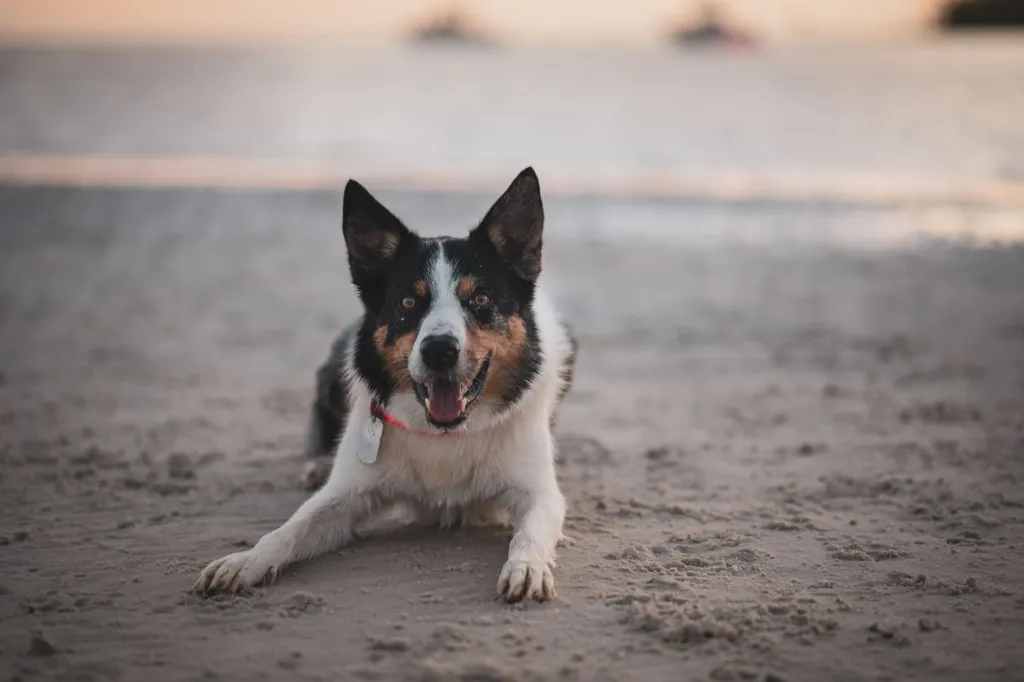
Positive Reinforcement in Action: When your dog shows any sign of calming (lying down, slower breathing, soft eyes), immediately mark and reward it.
The protocol:
- Watch for calm behavior: Head down, soft body, relaxed breathing
- Mark it: Use a calm, quiet “Yes” or clicker
- Reward: Drop a treat between their paws (don’t make them get up)
- Repeat: Every time they maintain calm, reinforce it
Why this is powerful: Through classical conditioning, your dog learns that calmness itself is rewarding, creating a positive feedback loop.
Step 6: Implement Gradual Re-Entry (15-60 minutes later)
Patience is key! Don’t rush your dog back into stimulation.
Re-entry checklist:
- ✅ Breathing is normal (not panting)
- ✅ Body is loose and relaxed
- ✅ Can engage with you calmly (soft eye contact)
- ✅ Responds to basic known commands (“Sit”)
If they’re not ready: Give more decompression time. Rushing creates setbacks.
Long-Term Strategies to Prevent Overstimulation in Dogs
Prevention is always more effective than crisis management. Here’s how to build your dog’s resilience over time:
Build a Strong Foundation: The “Calm Protocol”
Developed by Dr. Karen Overall, this protocol systematically teaches your dog to remain relaxed while you move around them.
Basic progression (15 days minimum):
Days 1-5: Practice having your dog stay on their mat while you:
- Stand still for increasing durations
- Take one step away and return
- Clap your hands once
- Reward only when they remain calm
Days 6-10: Increase complexity:
- Walk in circles around them
- Open and close doors
- Bounce a ball nearby
- Turn lights on and off
Days 11-15: Real-world challenges:
- Someone knocks on the door
- Another person enters the room
- You eat a meal
- Phone rings
Track your progress in a journal. You can do this!
Master Threshold Training: Understanding Your Dog’s Limits
The concept: Every dog has a threshold—the point where they transition from “able to think” to “purely reactive.”
How to find it:
- Identify a trigger (other dogs, busy streets, children playing)
- Start far away where your dog notices but remains calm
- Mark the distance where they can still take treats and respond to “Sit”
- Work below this threshold for all training sessions
- Gradually decrease distance over weeks (not days)
Example progression for dog reactivity:
| Week | Distance from Trigger | Success Criteria | Training Activity |
|---|---|---|---|
| 1-2 | 100 feet | Looks at dog, can redirect to you | ”Look at That” game |
| 3-4 | 75 feet | Glances at dog, maintains loose leash | Walking with attention |
| 5-6 | 50 feet | Brief look, quick refocus on handler | ”Touch” hand target game |
| 7-8 | 25 feet | Notices dog, chooses to engage with you | Parallel walking |
Critical rule: One bad experience (going over threshold) can erase weeks of progress. Patience is everything!
Create a Predictable Daily Routine
Dogs thrive on predictability—it reduces baseline anxiety and prevents overstimulation.
Optimal daily structure:
Morning (7-9 AM):
- Calm wake-up (no excited greetings)
- Bathroom break
- Breakfast in a quiet space
- Mental enrichment activity (puzzle toy, training session)
Midday (12-2 PM):
- Sniff walk or decompression walk (your dog sets the pace and sniffing route)
- Bathroom break
- Rest period (enforce naps if needed)
Afternoon (3-5 PM):
- Training session (10-15 minutes maximum)
- Calm parallel activity (they rest while you work)
- Interactive play (if appropriate for your dog’s arousal needs)
Evening (6-9 PM):
- Dinner
- Final bathroom break
- Calming activity (gentle massage, snuffle mat)
- Wind-down period before bed (no exciting play)
Consistency is key! Stick to similar times each day.
Environmental Management: Set Your Dog Up for Success
Control what you can control—your dog’s environment dramatically impacts their arousal levels.
Home environment modifications:
Reduce Visual Stimulation:
- Window film: Prevents reactivity to outside movement
- Strategic furniture placement: Block sightlines to trigger areas
- Crate covers: Create a den-like sanctuary
- Baby gates: Limit access to high-traffic areas
Manage Auditory Input:
- White noise machines: Mask unpredictable outdoor sounds
- Calming music: Species-specific music (Through a Dog’s Ear, iCalmPet)
- Soundproofing: Weather stripping, acoustic panels in key areas
- Predictable sounds: Use the same radio station or playlist daily
Olfactory Enrichment:
- Synthetic pheromones: Adaptil diffusers (mimics mother dog calming pheromone)
- Scent rotation: Introduce new safe scents weekly to provide novelty without overstimulation
- Avoid overwhelming fragrances: No strong cleaners, perfumes, or air fresheners
You can do this! Small environmental changes create massive behavioral improvements.
Exercise vs. Arousal: Getting the Balance Right
Common myth: “A tired dog is a good dog.”
Reality: An overstimulated dog is an exhausted but wired dog. Exercise must be mentally and physically balanced without tipping into overstimulation.
The 80/20 Rule for Dog Exercise:
- 80% mental enrichment and calm activities: Sniff walks, puzzle toys, training, scent work
- 20% physical exercise: Structured fetch, swimming, age-appropriate running
Overstimulating activities to limit:
- ❌ Dog park free-for-alls (unstructured, unpredictable arousal)
- ❌ Repetitive ball throwing for extended periods (creates adrenaline addiction)
- ❌ Rough wrestling with other dogs or people
- ❌ Chasing games with children
- ❌ Tug-of-war without clear start/stop rules
Calming activities for overstimulated dogs to embrace:
- ✅ Decompression walks (no agenda, your dog sniffs freely)
- ✅散Sniff work (nose work, find it games)
- ✅ Slow-paced training sessions (teaching new calm behaviors)
- ✅ Lick mats and frozen Kongs
- ✅ Calm parallel activities (they rest while you read nearby)
- ✅ Gentle swimming (not retrieving, just moving through water)
Training tip: After any exciting activity, always include a mandatory 15-30 minute decompression period before the next activity.
Advanced Calming Techniques: Professional-Level Interventions
Conditioned Relaxation: Building a “Calm Cue”
The goal: Create a verbal or visual cue that automatically triggers relaxation.
Dr. Karen Overall’s method:
Phase 1: Capture natural calm (Week 1-2)
- When your dog is already relaxed (after a nap, during quiet time), sit nearby
- Softly say your chosen cue word (“Settle,” “Easy,” “Relax”)
- Drop a treat between their paws
- Repeat 5-10 times per day when they’re already calm
Phase 2: Add the cue to mildly arousing situations (Week 3-4)
- During low-level activity (calm walk, gentle play), ask for “Sit”
- Once sitting, give your calm cue
- Reward any reduction in arousal (slower breathing, soft eyes)
- Gradually increase difficulty
Phase 3: Apply in real-world scenarios (Week 5+)
- When you notice early overstimulation signs, use your calm cue
- Reward any effort to calm (even tiny improvements)
- Pair with other calming strategies (remove from trigger, offer sniffing)
Patience is key! This takes months to fully condition, but becomes invaluable.
Biofeedback Training: Teaching Voluntary Relaxation
What it is: Teaching your dog to consciously control their physiological arousal state.
“Chin rest” protocol—a foundation behavior for veterinary visits and calming:
- Lure your dog’s chin onto your flat palm: Reward
- Mark the moment they rest their chin: “Yes!” and treat
- Build duration: Start with 1 second, gradually increase to 30+ seconds
- Transfer to other surfaces: Your leg, a mat, a pillow
- Add gentle handling: While their chin is resting, touch ears, paws, body
- Use as a calming behavior: When overstimulated, ask for “Chin” to interrupt arousal
Why this works: The dog learns that choosing to place their chin creates a calm state, giving them a voluntary relaxation tool.
Desensitization and Counter-Conditioning (DS/CC)
For specific triggers that consistently cause overstimulation.
The systematic approach:
Step 1: Identify the specific trigger
- Example: Children running and screaming
Step 2: Create a hierarchy (least to most intense)
- Photo of child (least arousing)
- Video of child walking
- Video of child running (no sound)
- Video with sound at low volume
- Watching children from 100 feet
- Watching from 50 feet
- Children running toward dog at distance
- Children running past at close range (most arousing)
Step 3: Work systematically through each level
- Present trigger at current level
- Before your dog reacts, deliver high-value treats continuously
- Trigger disappears, treats stop
- Repeat until your dog looks at trigger then immediately looks to you for treats (conditioned emotional response)
- Move to next level only after success at current level
Timeline expectation: 4-12 weeks minimum for one trigger. You can do this! Slow progress is lasting progress.
Medication and Supplements: When Professional Help Is Needed
Important: Always consult with a veterinary behaviorist before starting any supplements or medications.
Supplement options (over-the-counter):
- L-Theanine: Amino acid that promotes relaxation without sedation
- Tryptophan: Serotonin precursor
- Alpha-casozepine: Milk protein with calming properties
- CBD oil: Growing research supports anxiety reduction (verify legal status in your area)
Prescription medications (requires veterinary diagnosis):
- Fluoxetine (Prozac): For generalized anxiety and chronic overstimulation
- Clomipramine: For severe anxiety and compulsive behaviors
- Trazodone: Short-term situational anxiety (vet visits, thunderstorms)
- Gabapentin: Situational anxiety and pain-related stress
Critical understanding: Medication is not a replacement for training—it’s a tool that creates a neurological state where learning becomes possible. Think of it as “lowering the baseline” so training can be effective.
Frequently Asked Questions About Calming Overstimulated Dogs
How long does it take for an overstimulated dog to calm down naturally?
The answer depends on arousal intensity and individual dog factors. For mild overstimulation, dogs typically require 15-45 minutes of quiet decompression time to return to baseline. However, severe overstimulation or dogs with chronic stress issues may need 2-4 hours or even overnight to fully recover.
According to stress physiology research, cortisol (the primary stress hormone) has a half-life of approximately 20-30 minutes in dogs, but can take several hours to return to baseline levels after significant arousal. This is why rushing your dog back into stimulation too quickly undermines the recovery process.
The recovery timeline:
- 0-15 minutes: Immediate stress response begins decreasing
- 15-45 minutes: Heart rate and breathing normalize
- 45-90 minutes: Cortisol levels significantly decrease
- 2-4 hours: Full physiological and emotional baseline restoration
Patience is key! Respect your dog’s individual recovery time—some dogs bounce back quickly while others need extended decompression. Track patterns in a journal to understand your specific dog’s needs.
Can certain dog breeds handle stimulation better than others?
Absolutely—breed history and purpose significantly influence stress tolerance and stimulation processing. However, individual variation within breeds is often greater than variation between breeds.
Breeds typically more resilient to stimulation:
- Working and herding breeds (Border Collies, German Shepherds, Belgian Malinois): Bred for sustained focus despite environmental distractions
- Sporting breeds (Labrador Retrievers, Golden Retrievers): Selected for steady temperament in hunting environments
- Livestock guardian breeds (Great Pyrenees, Anatolian Shepherds): Bred for independent decision-making without overreacting
Breeds often more sensitive to overstimulation:
- Toy breeds (Chihuahuas, Pomeranians): Smaller size may create more perceived threats
- Primitive breeds (Siberian Huskies, Shiba Inus): Strong environmental awareness and independence
- Sensitive herding breeds (Shetland Sheepdogs, Australian Shepherds): High environmental vigilance
Critical point: Training and early socialization matter far more than breed. A well-socialized Chihuahua can handle more stimulation than a poorly socialized Labrador. Use breed tendencies as a starting point for understanding your dog’s needs, not as a limitation.
You can do this! Work with your individual dog’s temperament, regardless of breed expectations.
What’s the difference between an overstimulated dog and a hyperactive dog?
This is a crucial distinction that affects your training approach!
Overstimulated dog = Environmental response (reactive to external input)
- Cause: Too much sensory information from the environment
- State: Anxious, overwhelmed, stressed
- Behavior: Panting, pacing, inability to settle despite wanting to
- Body language: Tense, dilated pupils, stress signals
- Response to quiet environment: Calms down within 15-45 minutes
- Training need: Teach emotional regulation and create calm environments
Hyperactive dog = Internal energy state (innate arousal level)
- Cause: Insufficient mental/physical enrichment, breed characteristics, or medical conditions
- State: Energetic, eager, bouncy
- Behavior: Constant movement, seeking interaction, playful
- Body language: Loose, wiggly, play bows, soft eyes
- Response to quiet environment: May remain energetic, seeks outlet
- Training need: Appropriate exercise, mental enrichment, impulse control training
The overlap: Many hyperactive dogs become overstimulated because their baseline arousal is already elevated. Example: A Border Collie with insufficient mental stimulation (hyperactive) may become overstimulated more easily when exposed to novel environments.
Diagnostic question: Does your dog show stress signals (whale eye, excessive panting, avoidance) or excitement signals (play bows, bouncy movement, seeking engagement)? Stress = overstimulation. Excitement = hyperactivity.
Treatment differences:
- Overstimulation: Reduce input, create calm, teach relaxation
- Hyperactivity: Increase appropriate outlets, teach impulse control, structured activity
Many dogs experience both—address each component separately for best results. You can do this!
Final Thoughts: Building a Lifetime of Emotional Balance
Calming an overstimulated dog isn’t a one-time fix—it’s an ongoing commitment to understanding your dog’s emotional needs and building their capacity for self-regulation. Every time you recognize early warning signs and respond appropriately, you’re strengthening your dog’s resilience and deepening your bond.
Remember these core principles:
✅ Prevention beats intervention: Structure your dog’s environment and routine to minimize overstimulation opportunities
✅ Small progress compounds: Each successful calming session builds toward long-term emotional regulation
✅ Respect individual differences: Your dog’s threshold and recovery time are unique to them
✅ Consistency creates confidence: Predictable routines and responses help your dog feel safe
✅ Professional help is strength: If you’re struggling, certified behaviorists and trainers provide invaluable support
Patience is key! Changing emotional responses takes time—measured in weeks and months, not days. But the investment you’re making in your dog’s mental health and well-being will pay dividends in every aspect of their life, from better physical health to stronger bonds with your family.
You can do this! Every dog has the capacity to learn emotional regulation with the right support, environment, and training approach. Your commitment to understanding and helping your overstimulated dog is the foundation of their success.
Now get out there and start implementing these strategies—one small step at a time. Your dog is counting on you, and you have all the tools you need to help them thrive!