How to Get a Dog to Take a Pill: 7 Easy Tricks
Direct Answer: The Best Ways to Get Your Dog to Take a Pill
Getting a dog to take a pill is easiest when you hide the medication inside a soft, high-value treat like peanut butter, cheese, or a commercial pill pocket, then immediately follow with another treat to encourage swallowing. For dogs who won’t fall for food tricks, the direct pilling technique—placing the pill at the back of the tongue and gently holding the mouth closed—works reliably when done correctly.
After years of managing medications for my three dogs (including a Golden Retriever who could sniff out pills in anything and a senior Beagle on multiple daily meds), I’ve learned that successful pill administration is part strategy, part timing, and part knowing your individual dog’s personality.
🏥 Veterinary Disclaimer
This article provides general guidance based on common veterinary practices and personal experience. Always consult your veterinarian before administering any medication, crushing pills, or mixing medications with food, as some drugs require specific administration methods or have food interactions. If your dog consistently refuses medication or shows adverse reactions, contact your vet immediately.
Why Getting Dogs to Take Pills Can Be So Challenging
Dogs have an incredible sense of smell—up to 100,000 times more sensitive than ours—which means they can detect that pill hidden in their favorite food from a mile away. My Golden Retriever, Charlie, could eat around a pill buried in peanut butter and leave it sitting clean on the floor like a tiny accusation.
Beyond their super-sniffer abilities, dogs also have strong preferences and anxieties. Some dogs become suspicious of any food offered by hand after one negative experience. Others have texture sensitivities or simply don’t like being restrained for direct pilling.
Common reasons dogs refuse pills:
- Smell and taste detection – Medications often have bitter coatings
- Previous negative experiences – Gagging, choking, or unpleasant taste memories
- Texture aversion – Some dogs hate the feel of pills in their mouth
- Anxiety around restraint – Direct pilling can feel threatening
- Medical conditions – Nausea, mouth pain, or throat issues
Understanding why your dog resists helps you choose the right approach.
How to Get a Dog to Take a Pill: The Complete Method Guide
Method 1: Hiding Dog Pills in Food (The Trojan Horse Approach)
This is my go-to method and works for about 80% of dogs when done strategically. The key is using high-value foods with strong smells that mask the medication.
Best foods for hiding pills:
| Food Type | Why It Works | Best For |
|---|---|---|
| Peanut butter (xylitol-free) | Sticky texture, strong smell, dogs love it | Small to medium pills |
| Cream cheese | Very moldable, rich flavor | All pill sizes |
| Pill pockets (commercial) | Specifically designed to mask pills | Picky eaters |
| Cheese cubes | Easy to mold, irresistible to most dogs | Medium pills |
| Marshmallows | Sticky, sweet, easy to hide pills inside | Small pills |
| Liverwurst | Extremely strong smell overpowers medication | Difficult cases |
| Hot dog pieces | Soft, easy to stuff, high-value | Large pills |
| Canned dog food | Familiar, strong odor | Multiple pills |
My proven technique (learned after many failures):
- Don’t let your dog see the pill—prepare everything out of sight
- Make 3-4 treat balls: Hide the pill in the second or third one
- Rapid-fire delivery: Give one plain treat, then the pill treat, then immediately another plain treat
- Create excitement: Use an energetic voice and quick movements so they swallow without thinking
- No hesitation: The moment they eat the pill treat, present the next one
When I give my Beagle, Lucy, her arthritis medication, I prepare four small cream cheese balls. She’s so excited about the rapid-fire treats that she swallows the pill ball without even noticing. The key is momentum—don’t give them time to think about it.
Pro tip from my vet: Slightly warm the food (if safe) to make the smell stronger and more appealing.
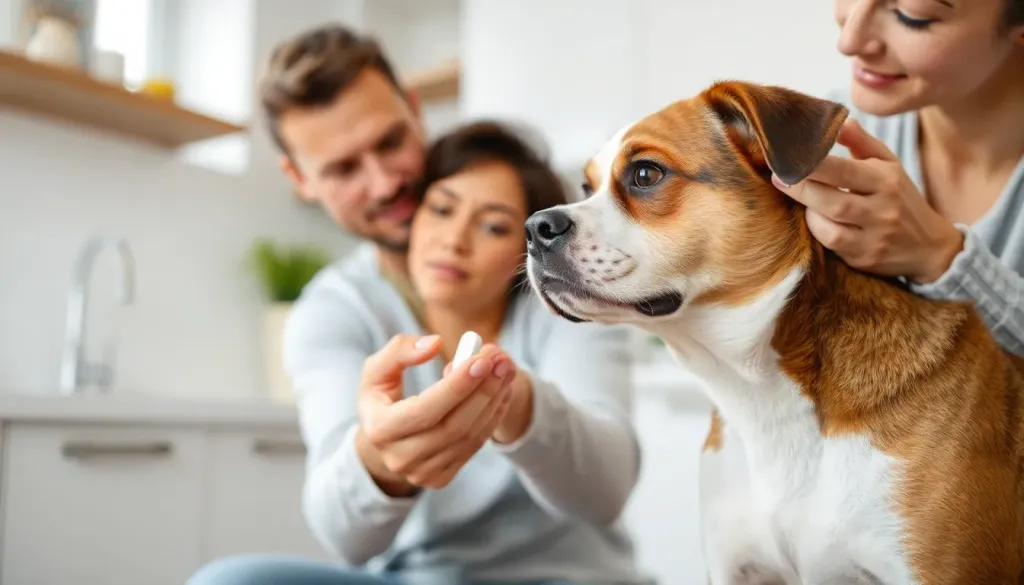
Method 2: Direct Pilling Technique for Dogs
When food tricks fail (looking at you, Charlie), the direct method is necessary. This technique mimics how veterinarians administer pills and, once mastered, takes only seconds.
Step-by-step direct pilling:
- Position your dog: Have them sit with their back against a wall or in a corner (prevents backing away)
- Hold the pill: Use your dominant hand, holding the pill between thumb and index finger
- Open the mouth: With your other hand, place your palm over the muzzle and gently press your thumb and middle finger behind the canine teeth—the mouth will naturally open
- Place the pill: Quickly place the pill as far back on the tongue as possible (aim for the back third of the tongue)
- Close and hold: Immediately close the mouth and hold it gently closed while pointing the nose slightly upward
- Encourage swallowing: Blow gently on their nose or stroke their throat downward
- Confirm they swallowed: Watch for a tongue flick or lick—that’s the swallow reflex
- Immediate reward: Give praise and a treat right away
Critical mistakes I made when learning this:
- Placing the pill too far forward (dogs can easily spit it out)
- Hesitating or acting nervous (dogs pick up on anxiety)
- Not checking if they actually swallowed (Charlie once held a pill in his cheek for 20 minutes)
According to PetMD, the direct pilling technique is most effective when done confidently and calmly. Your dog responds to your energy, so practice with treats first if you’re nervous.
Method 3: Homemade Dog Pill Pockets (Budget-Friendly Option)
Commercial pill pockets can get expensive, especially if your dog needs multiple daily medications. I started making homemade versions when Lucy went on long-term medication, and they work just as well.
Simple homemade pill pocket recipe:
Ingredients:
- 1/2 cup whole wheat flour
- 1/4 cup powdered milk
- 2 tablespoons peanut butter (xylitol-free)
- 2 tablespoons water (add more if needed)
- Optional: 1 tablespoon bacon bits for extra appeal
Instructions:
- Mix all ingredients into a dough
- Roll into small balls (about 1 inch)
- Press your thumb in to create a pocket
- Insert pill and seal the pocket
- Store in refrigerator for up to one week
My dogs can’t tell the difference between these and store-bought versions, and they cost a fraction of the price.
Alternative quick options:
- Marshmallow method: Press pill into a marshmallow center
- Banana slice: Mash a small piece of banana around the pill
- Soft bread ball: Roll white bread into a pill-sized ball around medication
- Baby food: Mix pill with meat-flavored baby food (check ingredients—no onion or garlic)
Tips for Giving Medication to Difficult Dogs (The Stubborn Cases)
Some dogs are PhD-level pill detectors. If you have one of these geniuses, here are advanced strategies I’ve developed:
The Distraction Method
Create competition or excitement:
- If you have multiple dogs, give pills during feeding time when they’re focused on food
- Toss multiple treats in the air, including the pill-filled one
- Have someone else make exciting noises while you give the pill
Charlie, my suspicious Golden, will take pills during mealtime that he’d normally refuse because he’s worried his sister will get his food.
The “Accidental Drop” Technique
Dogs often want what they think they’re not supposed to have. I sometimes “accidentally” drop the pill-filled treat while eating my own snack. Charlie immediately grabs it before I can “catch him.”
Timing Strategies
According to the American Kennel Club (AKC), timing your pill administration can significantly improve success:
- Before meals: Dogs are hungrier and less picky
- After exercise: They’re tired and less vigilant
- During routine treat time: Blends into normal habits
- Never during stressful times: After vet visits or during storms
Crushing Dog Pills Safely (When Appropriate)
IMPORTANT: Not all pills can be crushed. Time-release medications, enteric-coated pills, and certain drugs must be swallowed whole. Always ask your veterinarian first.
When my vet approved crushing Lucy’s allergy medication, it changed everything. I mix the crushed pill with a tiny amount of wet food, and she licks it up instantly.
Safe crushing method:
- Place pill between two spoons
- Press down to crush into fine powder
- Mix thoroughly with small amount of strong-flavored food
- Let dog finish entire portion
- Follow with regular meal
Best foods for crushed pills:
- Canned dog food (1-2 tablespoons)
- Plain yogurt
- Pumpkin puree
- Baby food (meat flavors)
- Bone broth (slightly thickened)
Understanding Pill Administration Challenges by Dog Personality
Through managing three very different dogs, I’ve learned that personality matters enormously:
The Food-Motivated Dog
Characteristics: Eats anything, not picky, motivated by treats Best method: Simple food hiding works perfectly My experience: My Beagle falls into this category—I could hide pills in cardboard and she’d probably eat it
The Suspicious Sniffer
Characteristics: Examines all food carefully, eats around pills, remembers bad experiences Best method: Strong-smelling foods, rapid delivery, crushed pills (if allowed) My experience: Charlie requires liverwurst or the distraction method
The Anxious Avoider
Characteristics: Stressed by direct handling, may snap or hide, associates pills with negative experiences Best method: Gradual desensitization, always use food methods, consider asking vet about liquid alternatives My experience: Build trust slowly—practice handling their mouth with treats only first
The Gentle Giant
Characteristics: Cooperative but sensitive, may gag easily, wants to please Best method: Direct pilling works well if done gently, praise heavily My experience: These dogs respond beautifully to calm, confident handling
Common Mistakes to Avoid When Giving Dogs Pills
After years of trial and error, here are the pitfalls I’ve learned to avoid:
❌ Don’t:
- Mix pills into a full meal (if they don’t finish, you won’t know if they got the dose)
- Show the pill to your dog or let them smell it before hiding
- Chase your dog around or corner them aggressively
- Give up and try again later (this creates a negative association)
- Crush pills without vet approval
- Use foods toxic to dogs (grapes, chocolate, xylitol, onions, garlic)
- Administer pills dry without food or water (can cause esophageal irritation)
✅ Do:
- Use small amounts of high-value food
- Stay calm and confident
- Prepare everything before bringing your dog over
- Always follow with water or wet food to help pills reach the stomach
- Keep pill-giving sessions positive with praise and treats after
- Be consistent with timing and method
- Ask your vet about alternative formulations if pills are impossible
Alternative Medication Forms (When Pills Become Impossible)
If you’ve tried everything and pills still aren’t working, talk to your vet about alternatives:
Available options:
| Form | Pros | Cons |
|---|---|---|
| Liquid medications | Easy to mix with food, adjustable dosing | Can taste bad, some dogs foam at mouth |
| Transdermal gels | Applied to ear skin, no struggle | More expensive, not available for all meds |
| Chewable tablets | Often flavored, dogs think they’re treats | Still may be refused by picky eaters |
| Compounded medications | Can be flavored to your dog’s preference | Requires special pharmacy, costs more |
| Injectable medications | Guaranteed delivery, less frequent dosing | Must be done by vet or learned skill |
When Charlie needed antibiotics after surgery, my vet prescribed a liver-flavored chewable version after I explained our pill struggles. He ate them like treats. Always ask if alternatives exist—many medications come in multiple forms.
Creating a Positive Pill-Giving Routine
The biggest game-changer for our household was making pill time part of our daily routine rather than a battle. Here’s the system that transformed our experience:
Morning medication routine:
- Same time daily: 8 AM, before breakfast
- Preparation area: Kitchen counter, dogs wait in living room
- Assemble treats: Three cream cheese balls, pill hidden in second one
- Call dogs over: Happy, excited voice
- Rapid delivery: Ball one, pill ball, ball three—all within 10 seconds
- Immediate breakfast: Regular meal follows right after
- Praise party: Lots of “good dog!” enthusiasm
This routine means my dogs now get excited about medication time because it signals breakfast is coming. Lucy actually reminds me if I’m running late.
Building positive associations:
- Practice giving plain treats using your chosen method when no pills are involved
- Never use your “pill voice”—keep the same happy tone
- Occasionally give treat-only sessions using the same routine
- If your dog refuses, take a break and try again later without making it dramatic
Troubleshooting Specific Pill-Giving Problems
Problem: Dog Holds Pill in Cheek and Spits It Out Later
Solution: After direct pilling, massage the throat gently downward and wait for the tongue flick. Keep their head elevated for 30 seconds. Immediately follow with a small treat and water to ensure the pill reaches the stomach.
Problem: Dog Eats Around the Pill Every Single Time
Solution: Switch to a stickier food like peanut butter or marshmallow that’s harder to separate. Alternatively, ask your vet if you can crush the pill and mix it thoroughly with a strong-smelling food.
Problem: Multiple Daily Pills Needed
Solution: Stagger throughout the day if possible, or use a small amount of canned food divided into portions. I give Lucy her morning pills in cream cheese, midday in peanut butter, and evening in her dinner. Variety prevents her from getting suspicious.
Problem: Dog Becomes Aggressive When You Try to Give Pills
Solution: This requires desensitization training. Start by simply touching their muzzle with treats, progress to opening their mouth briefly with treats, and build up gradually. If aggression continues, discuss liquid medications or transdermal options with your vet. Safety first—never force it if your dog shows signs of biting.
Problem: Pills Are Too Large
Solution: Ask your vet if the pill can be split or if a different dose/formulation exists. Some vets can prescribe two smaller pills instead of one large one. For approved medications, a pill splitter (available at pharmacies) makes dividing easier.
When to Contact Your Veterinarian
While most pill-giving challenges are behavioral, some situations require professional guidance:
Contact your vet if:
- Your dog consistently vomits after taking medication
- You notice excessive drooling, pawing at mouth, or signs of throat discomfort
- Your dog refuses all food when they know medication is involved (could indicate nausea from the drug itself)
- You’re unable to confirm they swallowed and medication isn’t working
- Your dog shows allergic reactions (swelling, hives, difficulty breathing)
- You’ve tried every method for a week without success
PetMD advises that some medications have critical timing requirements, and missing doses can be dangerous. If you’re struggling to give essential medications, vets can often find solutions—they’ve seen it all and won’t judge.
My Personal Pill-Giving Journey: What Finally Worked
I’ll be honest—when Charlie first needed daily thyroid medication three years ago, I cried in frustration. He would eat peanut butter off the outside of a pill and leave the pill itself. He’d spit out marshmallows. He’d detect crushed pills in an entire can of wet food.
What finally worked was combination strategy:
- Morning: Liverwurst pill pocket given during the competition of breakfast prep (his sister’s presence creates urgency)
- Evening: Direct pilling followed immediately by his favorite treat and dinner
It took two weeks of consistent practice, but now he barely reacts. I stay calm, keep it quick, and maintain the same routine daily.
Lucy, my Beagle, is easy—she’d eat a pill wrapped in paper if I told her it was food. But having that one difficult dog taught me every trick in the book.
My advice? Don’t give up, but also don’t make it a battle. Try different methods, stay calm, and remember that what works for one dog might not work for another. Keep experimenting until you find your dog’s “thing.”
FAQ: Common Questions About Getting Dogs to Take Pills
Can I mix my dog’s pill with their regular food?
Short answer: It’s better to use a small amount of special food rather than mixing with their full meal.
Detailed explanation: When you mix pills into a full meal, you risk your dog not finishing all the food (meaning they don’t get the full dose) or them eating around the pill. I learned this the hard way when Charlie left half his dinner and I couldn’t tell if he’d gotten his medication. Use just 1-2 tablespoons of high-value food to hide the pill, ensure they eat it completely, then give their regular meal. This guarantees they received the medication and keeps their regular food from becoming suspicious.
How long should I wait after giving a pill to feed my dog their meal?
Short answer: Immediate feeding is usually fine and often recommended to help pills reach the stomach.
Detailed explanation: According to veterinary guidelines, most pills should be followed by food or water to prevent esophageal irritation and ensure proper dissolution in the stomach. I give my dogs their pills in a small treat, then immediately serve their regular meal. However, some medications have specific requirements—certain antibiotics need to be given on an empty stomach, while others require food to prevent stomach upset. Always follow your vet’s specific instructions for timing. My vet provided a chart showing exactly when each of Lucy’s three medications should be given relative to meals.
What should I do if my dog vomits after taking a pill?
Short answer: Wait and observe, then contact your vet—do not automatically give another dose.
Detailed explanation: Vomiting after medication can happen for several reasons: the pill irritated the stomach, your dog has an empty stomach, they have a sensitivity to the medication, or they ate too quickly after the pill. If vomiting occurs within 15-20 minutes and you can see the intact pill, call your vet for guidance on whether to re-dose. If the pill isn’t visible or vomiting happens later, assume they absorbed the medication and don’t give another dose (this could cause overdose). When Lucy vomited her arthritis medication, my vet explained that pills start dissolving within 10-15 minutes, so later vomiting typically means the dose was absorbed. Always call your vet when vomiting occurs—they can adjust timing, switch formulations, or prescribe anti-nausea medication to give before the pill.
Can I crush all types of dog pills to make them easier to give?
Short answer: No—many pills cannot be crushed safely and effectively.
Detailed explanation: Time-release medications, enteric-coated pills (designed to dissolve in the intestines rather than stomach), and certain chemotherapy or hormone drugs should never be crushed. Crushing these medications can cause:
- Dangerous rapid absorption of time-release drugs
- Stomach irritation from medications meant to dissolve elsewhere
- Reduced effectiveness of protective coatings
- Exposure to potentially hazardous compounds
Always ask your veterinarian before crushing any medication. When I wanted to crush Charlie’s thyroid pill, my vet explained that while that specific medication could be crushed, his other supplement couldn’t be. She provided clear guidance on which was safe. If your vet approves crushing, use a pill crusher (not just a knife) to create a fine powder that mixes thoroughly with food, ensuring even dosing.
My dog needs multiple pills daily—how do I manage this without them getting suspicious?
Short answer: Vary your methods, timing, and foods, and establish a positive routine that includes pills as normal.
Detailed explanation: Managing multiple daily medications requires strategy. Here’s my system for Lucy, who takes three different pills:
Morning (7:30 AM):
- Thyroid pill in small cream cheese ball
- Given before breakfast as part of routine
Midday (1:00 PM):
- Allergy pill (crushed, vet-approved) mixed in 2 tablespoons plain yogurt
- Given as a “special snack”
Evening (6:00 PM):
- Joint supplement in peanut butter
- Given before dinner
The key strategies:
- Different delivery vehicles prevent pattern recognition
- Consistent timing makes it routine rather than suspicious
- High-value foods maintain excitement
- Always associated with positive outcomes (meals, treats, walks)
- Never apologetic or anxious in your approach
I also occasionally give these same foods without pills so they don’t become red flags. Some weeks I’ll do all three pills in rapid-fire cream cheese balls if she’s being picky—flexibility is important. The goal is making medication feel like a normal, positive part of their day rather than a stressful event.
Final Thoughts: You’ve Got This
Getting a dog to take a pill can feel overwhelming, especially when you’re dealing with a stubborn or anxious pup. But here’s what I’ve learned through three years of daily medications with multiple dogs: patience, consistency, and the right method for your specific dog make all the difference.
You’re not alone in this struggle—every dog parent has faced this challenge, and there’s absolutely a solution that will work for your situation. Whether it’s finding the perfect food to hide pills in, mastering the direct technique, or working with your vet to find alternative formulations, success is possible.
Remember that your dog isn’t being difficult to spite you—they’re just being a dog, with all their amazing senses and natural instincts. Stay calm, keep trying different approaches, and celebrate small victories.
My once-impossible pill-refusing Golden Retriever now takes his medication without fuss because I found his method and stuck with it consistently. Your breakthrough moment is coming too.
Most importantly: Never hesitate to ask your veterinarian for help. They can provide medication alternatives, demonstration videos, or even have you bring your dog in for a training session. Your dog’s health depends on consistent medication, so finding a workable solution is worth the effort.
You’re doing great—the fact that you’re here researching and trying to find better ways shows how much you care about your dog’s wellbeing. Keep going, stay patient with both your dog and yourself, and know that countless dog parents are cheering you on from their own kitchens, cream cheese in hand.