Stop Puppy Destructive Chewing Fast!
The Complete Guide to Stopping Puppy Destructive Chewing
Puppy destructive chewing can be stopped by combining proper redirection to appropriate chew toys, consistent training, puppy-proofing your environment, and addressing the underlying reasons why your puppy chews (teething, boredom, anxiety, or exploration). The key is patience, consistency, and understanding that chewing is a natural puppy behavior that needs to be channeled appropriately, not punished harshly.
Veterinary Disclaimer
Important: While this guide provides comprehensive behavioral training advice based on professional dog training principles and veterinary behavioral science, every puppy is unique. If your puppy’s destructive chewing seems excessive, causes injury, or is accompanied by other behavioral concerns (severe anxiety, aggression, or compulsive behaviors), consult with a certified professional dog trainer (CPDT) or veterinary behaviorist for personalized guidance.
Why Do Puppies Chew Everything? Understanding the Root Causes
Before we dive into solutions, let’s understand why your puppy is turning your favorite shoes into confetti. According to the American Kennel Club (AKC), puppies chew for several developmental and behavioral reasons:
Primary Reasons for Puppy Chewing:
1. Teething Discomfort (3-8 months)
- Puppy teeth begin erupting around 3-4 weeks
- Adult teeth start coming in at 3-4 months
- The process causes significant gum discomfort
- Chewing provides natural pain relief through counter-pressure
2. Natural Exploration and Learning
- Puppies use their mouths like human babies use their hands
- Texture, taste, and resistance teach them about their environment
- This is normal cognitive development, not misbehavior
3. Boredom and Excess Energy
- Under-exercised puppies seek mental stimulation
- Chewing becomes an entertaining solo activity
- Lack of appropriate outlets leads to destructive choices
4. Separation Anxiety or Stress
- Chewing can be a self-soothing mechanism
- Often targets items with your scent (shoes, clothing, furniture)
- May intensify when you leave the house
5. Attention-Seeking Behavior
- Puppies quickly learn that chewing certain items gets immediate reactions
- Even negative attention reinforces the behavior
- Creates a reward cycle: chew forbidden item → get attention
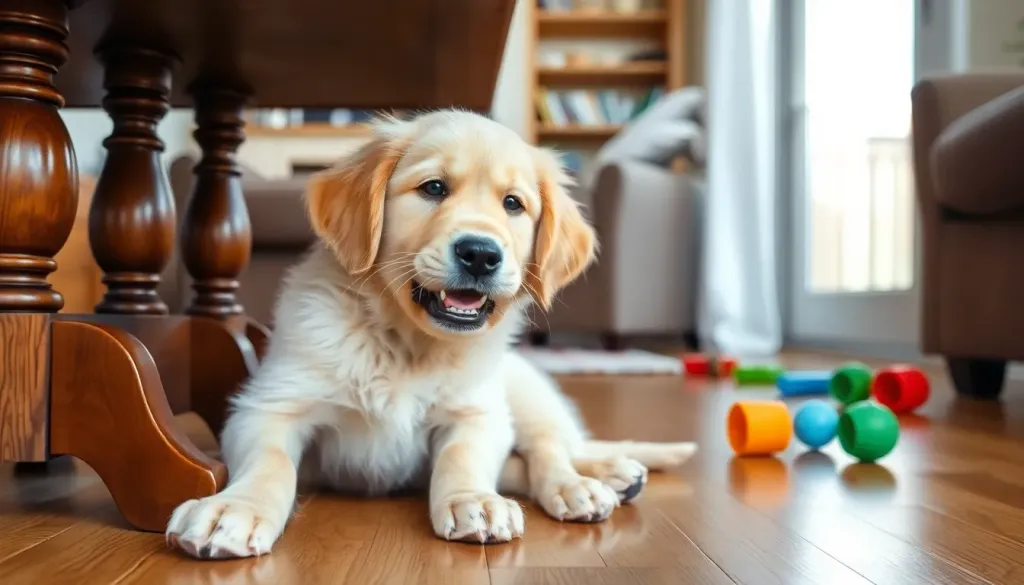
How to Stop Puppy Destructive Chewing: The Complete 8-Step System
Here’s my proven action plan that combines behavioral science with practical dog training techniques. You can do this!
Step 1: Puppy-Proof Your Home Like a Professional
Remove temptation before it becomes a problem. This is your first line of defense and requires zero training—just smart management.
Action Items:
-
Elevate Everything Chewable
- Shoes go in closed closets or on high shelves
- Remote controls, phone chargers, and electronics stay on tables
- Children’s toys should be stored in bins with lids
-
Block Access to Furniture
- Use baby gates to restrict access to certain rooms
- Close bedroom and bathroom doors
- Block under beds and couches where puppies can reach hidden items
-
Secure Electrical Cords
- Use cord protectors or PVC piping
- Route cords behind furniture
- Apply bitter apple spray to exposed sections
-
Protect Furniture Legs and Baseboards
- Apply homemade chew deterrent spray (recipe below)
- Use plastic corner guards from hardware stores
- Create physical barriers with strategically placed boxes or furniture
Homemade Chew Deterrent Spray Recipe:
| Ingredient | Amount | Purpose |
|---|---|---|
| White vinegar | 1 cup | Unpleasant taste, safe for wood |
| Apple cider vinegar | 1 cup | Additional bitter flavor |
| Lemon juice | 2 tablespoons | Citrus scent dogs dislike |
| Water | 1 cup | Dilution for safe application |
Mix in spray bottle, shake well, test on small area first, reapply every 2-3 days.
Step 2: Provide an Arsenal of Appropriate Chew Toys
Your puppy NEEDS to chew—give them legal outlets! According to PetMD, puppies require 3-5 different textures and types of chew toys to satisfy their natural chewing instincts.
Best Puppy Chew Toys by Category:
| Toy Type | Examples | Best For |
|---|---|---|
| Frozen/Cold Toys | Kong Puppy (frozen with treats), frozen wet washcloths | Teething pain relief |
| Durable Rubber | Nylabone Puppy, Kong Classic, Goughnuts | Heavy chewers, long-lasting |
| Soft Plush | Heartbeat puppy toys, rope toys | Gentle chewers, comfort |
| Interactive Puzzle | Treat-dispensing balls, snuffle mats | Mental stimulation, boredom |
| Natural Chews | Bully sticks, yak cheese chews, sweet potato chews | Satisfying texture variety |
Rotation Strategy:
- Keep 3-4 toys available daily
- Rotate out toys every 2-3 days to maintain novelty
- “New” old toys are exciting again!
- Store unused toys in a sealed container to preserve scent
Step 3: Master the “Leave It” and “Drop It” Commands
These two commands are game-changers for managing destructive chewing. Patience is key!
Teaching “Leave It” (Prevention Command):
- Hold a treat in your closed fist
- Let your puppy sniff and paw at your hand
- Wait silently until they back away or stop trying
- The instant they stop, say “Yes!” and give a treat from your OTHER hand
- Repeat 10-15 times per session, twice daily
- Progress to placing treats on the floor, covering with your hand
- Eventually practice with forbidden items (shoe, sock) while on leash
Teaching “Drop It” (Emergency Command):
- Start with a low-value toy in your puppy’s mouth
- Show a high-value treat near their nose
- Most puppies will drop the toy to get the treat
- As they drop it, say “Drop it!” then give the treat
- After success, give the toy back (teaches “drop it” doesn’t mean permanent loss)
- Practice 5-10 times per session
- Gradually increase to higher-value items (but always trade up with treats)
Critical Difference:
- “Leave it” = Don’t touch that item (prevention)
- “Drop it” = Release what’s already in your mouth (intervention)
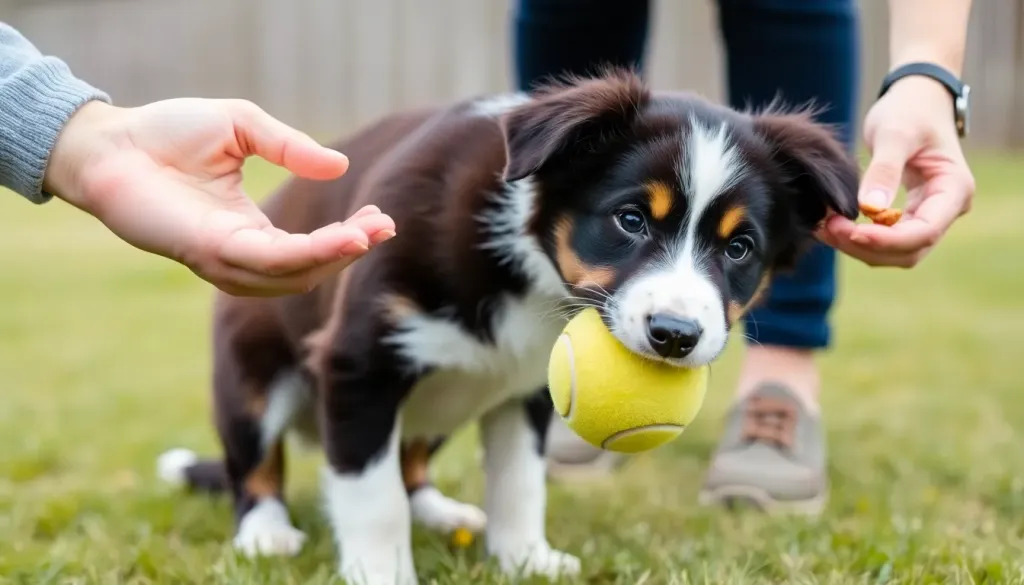
Step 4: Implement the Redirect-and-Reward System
This is the heart of positive reinforcement training. You’re teaching your puppy what TO chew, not just what NOT to chew.
The Exact Process (Follow Every Time):
- Catch them in the act of chewing something forbidden
- Interrupt calmly with “Ah-ah” or “No” (one time, neutral tone—NOT yelling)
- Immediately redirect by offering an appropriate chew toy
- The moment they take the appropriate toy, enthusiastically praise: “YES! Good chew!”
- Give a small treat or continue playing with them and the toy
- Remove or block access to the forbidden item
Why This Works (Classical Conditioning):
- You’re creating a positive association with appropriate items
- Punishment alone doesn’t teach what TO do
- Rewards strengthen desired behaviors through dopamine release
- Consistency rewires brain pathways (neuroplasticity)
Common Mistake to Avoid: ❌ Don’t: Chase your puppy, grab items from their mouth forcefully, or punish after the fact ✅ Do: Trade up with something better, remain calm, make appropriate toys MORE rewarding
Step 5: Increase Physical Exercise and Mental Stimulation
A tired puppy is a well-behaved puppy! According to veterinary behaviorists, most destructive behaviors stem from unmet energy needs.
Age-Appropriate Exercise Guidelines:
| Puppy Age | Daily Exercise | Mental Stimulation |
|---|---|---|
| 2-3 months | 10-15 min walks, 2x daily | 5-min training sessions, 3x daily |
| 4-6 months | 20-30 min walks, 2x daily | 10-min training, puzzle toys |
| 7-12 months | 30-45 min walks, 2x daily | Advanced training, interactive play |
Mental Stimulation Activities (Tire Them Out Mentally):
-
Food Puzzle Toys
- Freeze wet food in Kong toys
- Hide kibble in snuffle mats
- DIY: kibble in cardboard boxes or paper bags
-
Training Sessions
- Practice basic commands: sit, down, stay, come
- Learn new tricks: spin, shake, rollover
- Training uses more mental energy than physical exercise
-
Socialization Outings
- Puppy classes (after vaccinations)
- Pet-friendly stores
- Supervised playdates with vaccinated dogs
-
Scent Work Games
- Hide treats around the house
- Let them “hunt” for toys
- Build natural foraging instincts
Energy Management Formula: Physical Exercise + Mental Stimulation + Appropriate Chew Outlets = Reduced Destructive Behavior
Step 6: Manage Separation Anxiety-Related Chewing
If chewing intensifies when you leave, separation anxiety may be the culprit. This requires specialized techniques.
Signs of Separation Anxiety Chewing:
- Destruction occurs only when you’re gone
- Targets items with your scent
- Accompanied by whining, pacing, or accidents
- Puppy follows you everywhere when home
Separation Anxiety Protocol:
-
Practice Short Departures
- Leave for 30 seconds, return before anxiety starts
- Gradually increase to 1 minute, 2 minutes, 5 minutes
- No emotional greetings—keep arrivals calm
-
Create Positive Alone-Time Associations
- Special toys that appear ONLY when you leave
- High-value frozen Kong appears as you walk out
- Calming music (classical or dog-specific playlists)
-
Desensitize Departure Cues
- Pick up keys randomly without leaving
- Put on shoes but don’t go anywhere
- Break the anxiety-triggering routine
-
Provide a Safe Space
- Crate training with positive associations
- Comfortable bed with your scent (old t-shirt)
- Calming pheromone diffusers (Adaptil)
When to Seek Professional Help: If separation anxiety is severe (self-injury, extensive property damage, lasting more than 30 minutes), consult a veterinary behaviorist. Medication combined with behavior modification may be necessary.
Step 7: Use Confinement Strategically (Not as Punishment)
Proper confinement prevents rehearsal of bad habits. You can’t supervise 24/7, so smart management is crucial.
Crate Training for Chewing Prevention:
Benefits:
- Prevents unsupervised destruction
- Creates a safe den space
- Aids in potty training simultaneously
- Teaches self-soothing and independence
Proper Setup:
- Size: Large enough to stand, turn, and lie down comfortably
- Location: Quiet area, not isolated from family
- Comfort: Soft bedding, safe chew toy, water access
- Duration Limits:
| Puppy Age | Maximum Crate Time |
|---|---|
| 8-10 weeks | 30-60 minutes |
| 11-14 weeks | 1-3 hours |
| 15-16 weeks | 3-4 hours |
| 17+ weeks | 4-5 hours max |
Playpen Alternative:
- More space than crates
- Include potty pad, water, toys, bed
- Good for longer confinement periods
- Limits choices without isolation
Critical Rule: Never use confinement as punishment. The space should feel safe, not like “time-out jail.”
Step 8: Consistency and Household Rules
Everyone in your household must follow the same rules. Mixed messages confuse puppies and slow training dramatically.
Family Training Meeting Agenda:
-
Define Forbidden Items
- What CAN the puppy chew? (specific toys)
- What is NEVER allowed? (furniture, shoes, etc.)
- Post a list on the refrigerator
-
Establish Consistent Commands
- Everyone uses “Leave it” (not “Stop it” or “No no”)
- Everyone uses “Drop it” (not “Give me that”)
- Agree on reward markers: “Yes!” or click
-
Assign Responsibilities
- Who provides morning exercise?
- Who conducts training sessions?
- Who supervises during high-risk times?
-
Track Progress
- Keep a log of destructive incidents
- Note triggers (time of day, situations)
- Celebrate improvements weekly
Patience is key! Behavior change takes 3-6 weeks of consistency. Don’t give up after a few days!
Understanding Chewing Behavior: The Science Behind the Solution
Let’s dive deeper into the psychology and physiology so you understand WHY these methods work.
The Teething Timeline (Critical Period)
Puppy Dental Development:
| Age | What’s Happening | Chewing Intensity |
|---|---|---|
| 0-3 weeks | No teeth, nursing only | None |
| 3-6 weeks | 28 baby teeth emerge | Low-moderate |
| 12-16 weeks | Baby teeth loosen | HIGH (very uncomfortable) |
| 4-6 months | Adult teeth erupt | PEAK (42 adult teeth coming in) |
| 7-8 months | Adult dentition complete | Decreasing |
| 8-12 months | Settling into adult patterns | Moderate, habit-based |
Teething Pain Relief Strategies:
- Frozen items: Wet washcloths frozen into knots, frozen carrots, frozen Kong toys
- Cold water: Ice cubes in water bowl provide numbing relief
- Textured toys: Rubber nubs massage sore gums
- Gentle gum massage: Use your finger to rub gums (builds trust too)
The Reinforcement Cycle (Why Punishment Fails)
Positive Reinforcement (What Works):
- Puppy chews appropriate toy
- You provide praise/treat
- Brain releases dopamine (feel-good chemical)
- Behavior strengthens and repeats
Punishment-Based Approaches (Why They Fail):
- Puppy chews furniture
- You yell or physically punish
- Puppy learns: “Chewing when human watches = bad”
- Puppy chews when you’re not watching (sneaky chewing)
- No learning of what TO do instead
- Fear damages trust and relationship
The Science: According to behavioral studies published in veterinary journals, positive reinforcement training shows 80-95% success rates, while punishment-based methods show only 30-50% success and often create secondary behavioral issues (fear, aggression, anxiety).
Additional Advanced Strategies for Persistent Chewers
If you’ve implemented the core system and still face challenges, try these advanced techniques:
Taste Aversion Therapy
Commercial Bitter Sprays:
- Grannick’s Bitter Apple
- Fooey! Ultra-Bitter Training Aid
- Pets Are Kids Too Bitter Spray
Application Strategy:
- Spray target items liberally
- Reapply every 24 hours for first week
- Let puppy discover the taste naturally (no forcing)
- When they avoid it, massively reward with praise
Important: About 20% of dogs don’t mind bitter tastes. If your puppy doesn’t react, this method won’t work—focus on other strategies instead.
Environmental Enrichment Upgrade
Create a “Yes” Zone:
- Designate one room as completely puppy-safe
- Fill with appropriate toys only
- Use when you need unsupervised time
- Prevents any access to forbidden items
Rotating Enrichment Calendar:
| Day | Morning Activity | Afternoon Enrichment |
|---|---|---|
| Monday | Frozen Kong with peanut butter | Cardboard box destruction (supervised) |
| Tuesday | Training session (new trick) | Snuffle mat with kibble |
| Wednesday | Socialization outing | Bully stick chew time |
| Thursday | Hide-and-seek with treats | Rope toy tug games |
| Friday | Puzzle feeder meal | Frozen carrot chews |
The “Trading Up” Protocol for Valuable Items
Some items are too valuable for simple redirection. Use this for prized possessions:
- High-Value Treat Ready: Always have chicken, cheese, or hot dog pieces prepared
- Approach Calmly: Don’t chase—walk normally toward puppy
- Show Premium Treat: Hold near nose but don’t give yet
- Wait for “Drop It”: Don’t grab—let them choose to drop
- Immediate Reward: Multiple treats for compliance
- Trade Back Sometimes: Occasionally return the item (teaches trust)
Build the habit: “When I drop things for my human, amazing things happen!”
Breed-Specific Chewing Considerations
Different breeds have different chewing drives and styles. Tailor your approach:
High-Energy Working Breeds (Labs, Shepherds, Border Collies)
- Challenge: Extreme energy and intelligence
- Solution: Double the mental stimulation, advanced puzzle toys, agility training
- Best Toys: Indestructible rubber, treat-dispensing rolling toys
Terrier Breeds (Jack Russells, Cairns, Yorkies)
- Challenge: Strong prey drive, love destroying/shredding
- Solution: Provide “legal” destruction opportunities (paper towel rolls, cardboard)
- Best Toys: Squeaky toys, rope toys for shaking/killing
Brachycephalic Breeds (Bulldogs, Pugs, Boston Terriers)
- Challenge: Less endurance for long play, jaw structure differences
- Solution: Shorter, cooler play sessions; softer chew toys
- Best Toys: Softer rubber, fabric toys, shorter chew sticks
Hound Breeds (Beagles, Bassets, Coonhounds)
- Challenge: Nose-driven, easily bored, vocal when frustrated
- Solution: Scent work, snuffle mats, food puzzles
- Best Toys: Treat-dispensing toys, scent-infused chews
Common Mistakes That Sabotage Your Training (Avoid These!)
Even well-intentioned owners make these errors. Let’s fix them:
❌ Mistake #1: Giving Old Shoes or Socks as Toys
Why It Fails: Puppies can’t distinguish between “old shoe” and “new shoe”—they just learn “shoes are toys”
Do This Instead: Only give items that look completely different from forbidden objects
❌ Mistake #2: Inconsistent Response to Chewing
Why It Fails: Sometimes allowing couch chewing when you’re tired confuses the rules
Do This Instead: Set boundaries you can maintain 100% of the time, use management (gates, crates) when you can’t supervise
❌ Mistake #3: Punishing After the Fact
Why It Fails: Dogs live in the moment—punishment 5 minutes later has zero connection to chewing
Do This Instead: Only interrupt in-the-moment; if you missed it, clean up and move on
❌ Mistake #4: Not Enough Appropriate Toys
Why It Fails: One toy gets boring; puppies need variety
Do This Instead: Minimum 5-7 different toys; rotate daily
❌ Mistake #5: Expecting Too Much Too Soon
Why It Fails: Behavior change requires weeks of repetition; frustration leads to giving up
Do This Instead: Celebrate small wins; track progress weekly; remember puppies are babies learning
Troubleshooting Guide: When Standard Methods Aren’t Working
Problem: Puppy only chews when I leave the room
Solution: This signals lack of supervision. Use tether training (leash attached to you) or crate/playpen when you can’t actively watch. Gradually build independence.
Problem: Puppy destroys “indestructible” toys within minutes
Solution: You have a super-chewer! Try:
- Goughnuts (guaranteed indestructible, will replace if damaged)
- West Paw Zogoflex (extremely durable, dishwasher safe)
- Black Kong Extreme (toughest Kong version)
- Supervise all chewing; remove if pieces break off
Problem: Bitter spray doesn’t work
Solution: 20% of dogs aren’t deterred by bitter. Try:
- Citrus-based sprays instead
- Physical barriers (furniture blockers)
- Complete supervision or confinement
- Increase exercise and enrichment
Problem: Chewing intensifies after training sessions
Solution: Over-arousal can trigger frantic chewing. After training:
- 5-10 minute calm-down period
- Gentle petting or massage
- Calm activity (sniffing walk, gentle puzzle feeder)
- Avoid exciting play immediately after
Problem: Only chews one specific item obsessively
Solution: May indicate compulsive behavior or medical issue:
- Check for pain/discomfort (dental problems, GI issues)
- Consult veterinary behaviorist
- Increase overall enrichment
- Block access completely during evaluation
Creating Your Personalized Anti-Chewing Action Plan
Let’s turn everything into YOUR specific plan. Here’s your implementation checklist:
Week 1: Foundation Setup
- Puppy-proof entire home (remove/elevate all chewable items)
- Purchase 5-7 varied appropriate chew toys
- Set up safe confinement area (crate or playpen)
- Hold family meeting to establish consistent rules
- Start “Leave It” command training (twice daily, 5 minutes)
- Create exercise schedule matching puppy’s age
Week 2: Active Training Phase
- Continue “Leave It” practice daily
- Begin “Drop It” command training
- Implement redirect-and-reward system every chewing incident
- Introduce frozen Kong toys
- Add one mental enrichment activity daily
- Track chewing incidents in notebook (time, trigger, item)
Week 3: Consistency & Refinement
- Practice commands in different rooms/situations
- Introduce toy rotation schedule
- Increase exercise duration by 5-10 minutes
- Test bitter spray on persistent problem areas
- Review incident log—identify patterns
- Adjust strategy based on what’s working
Week 4+: Maintenance & Growth
- Gradually increase unsupervised time (by 5-minute increments)
- Proof commands with higher distractions
- Introduce new puzzle toys/enrichment activities
- Celebrate improvements (fewer incidents = success!)
- Continue consistency even when behavior improves
You can do this! Remember, your puppy isn’t being “bad”—they’re being a puppy. Your job is to guide them toward appropriate choices with patience and consistency.
Frequently Asked Questions About Puppy Destructive Chewing
How long does the destructive chewing phase last?
Destructive chewing typically peaks between 4-6 months during the most intense teething period and gradually decreases by 8-12 months when adult teeth are fully established. However, without proper training and management, inappropriate chewing can become a lifelong habit. According to the AKC, puppies who receive consistent redirection training and appropriate outlets during the first year rarely develop destructive chewing as adults. The key is what you teach during this critical developmental window—puppies are forming habits that last a lifetime!
Important distinction: Exploratory chewing (learning about environment) versus destructive chewing (anxiety, boredom, or bad habits). Even after teething ends, inadequate exercise or mental stimulation can cause destructive behaviors at any age.
Should I let my puppy cry in their crate when I’m trying to prevent chewing?
This depends on WHY they’re crying. Brief fussing (1-3 minutes) when first crated is normal adjustment and should be ignored—responding teaches that crying gets attention. However, prolonged distress (10+ minutes of intense crying, signs of panic) indicates the crate training process moved too quickly. Never use the crate as punishment for chewing.
Proper approach:
- Build positive crate associations BEFORE using for confinement (feed meals inside, toss treats in randomly, practice short durations while you’re home)
- Start with 5-minute intervals and gradually increase
- Provide a special chew toy that ONLY appears in the crate (frozen Kong works great)
- Place crate in room with you initially, gradually move to final location
- Ensure puppy is exercised and has eliminated before crating
If separation anxiety is causing the distress (not just crate adjustment), you need the specialized protocol outlined earlier in this guide. Severe cases may require professional help from a certified behaviorist.
Is it okay to use a muzzle to stop destructive chewing?
No, muzzles are not appropriate for preventing destructive chewing. Muzzles are safety tools for specific situations (veterinary exams, introductions with bite-risk dogs, temporary restraint) and should never be used as a training method or long-term management solution for normal puppy behavior.
Why muzzles fail for chewing:
- They don’t address the underlying cause (boredom, anxiety, teething)
- Puppies can’t pant effectively, creating overheating risk
- Prevents drinking water
- Causes frustration and stress
- Doesn’t teach appropriate behavior
- Can damage trust and create fear
Do this instead: Proper management (confinement when unsupervised), redirection training, appropriate chew outlets, and addressing root causes. These methods actually solve the problem rather than just suppressing a symptom. Patience is key!
If your puppy’s chewing is so severe you’re considering a muzzle, consult with a certified professional dog trainer or veterinary behaviorist to identify underlying issues and create a proper behavior modification plan.
My puppy only chews expensive things (shoes, furniture). Why?
Your puppy isn’t targeting expensive items intentionally—they’re attracted to specific qualities that expensive items often share:
Why “expensive” items are irresistible:
- Leather/quality materials have appealing textures and scents
- Your scent is strongest on frequently worn shoes and used furniture
- Interesting textures (soft, chewy, satisfying resistance)
- Attention history (previous reactions when they chewed these items)
The scent connection: Dogs have 300 million scent receptors (humans have 6 million). Items with your scent are comforting and interesting. Shoes are especially targeted because they carry concentrated scent from your feet (lots of sweat glands).
Solutions:
- Store ALL valuable items completely out of reach (not just “put away”—truly inaccessible)
- Provide chew toys you’ve handled to transfer your scent
- Leave recently worn t-shirt in crate/safe space for scent comfort
- Apply bitter spray to furniture legs
- Increase supervised interaction time so they don’t need to seek your scent through objects
Important insight: Chewing your belongings often indicates your puppy wants MORE of you—more attention, interaction, and engagement. Increase one-on-one bonding time, training sessions, and play to fill this need appropriately. You can do this!
Final Thoughts: You’re Building a Lifetime of Good Habits
Stopping destructive chewing isn’t just about saving your furniture—it’s about building communication, trust, and good habits that last your dog’s entire life. Every time you redirect your puppy to an appropriate toy and reward them, you’re strengthening neural pathways that say “THIS is what makes my human happy.”
The three pillars of success:
- Management (prevent access to forbidden items)
- Training (teach appropriate choices through positive reinforcement)
- Enrichment (provide adequate physical exercise and mental stimulation)
Remove any one pillar, and the system becomes unstable. But combine all three with consistency and patience, and you WILL succeed.
Remember, your 4-month-old puppy has the impulse control of a toddler and the dental discomfort of teething. They’re not destroying your home out of spite—they’re navigating a world they’re still learning about with the only tools they have. Your job is to guide them with patience, clear communication, and appropriate outlets.
You can do this! Thousands of puppy owners face this exact challenge, implement these strategies consistently, and emerge on the other side with well-adjusted adult dogs who know exactly what’s appropriate to chew. You’re investing in years of companionship—these weeks of focused training are absolutely worth the effort.
Patience is key! Celebrate small victories, forgive setbacks, and remember that behavior change happens gradually through repetition. Your puppy is learning, growing, and becoming the amazing adult dog they’re meant to be—with your guidance every step of the way.
Sources & Additional Resources:
- American Kennel Club (AKC) - Puppy Training & Behavior: https://www.akc.org/dog-care/
- PetMD - Veterinary-Reviewed Dog Behavior Articles: https://www.petmd.com/
- Certified Professional Dog Trainers (CPDT) - Find a qualified trainer in your area
- Veterinary Behaviorists (DACVB) - For severe cases requiring professional intervention
This guide is based on positive reinforcement training principles supported by veterinary behavioral science and professional dog training standards.