Soothe Dog Hot Spots: 7 Natural Home Remedies

How to Soothe Dog Hot Spots Naturally
Yes, natural remedies can effectively soothe minor dog hot spots by reducing inflammation, fighting bacteria, and promoting skin healing—but veterinary consultation is often crucial for proper diagnosis, treatment of underlying causes, and management of severe or persistent cases. When I first noticed a raw, weeping patch on my Golden Retriever’s back, I learned quickly that hot spots require immediate attention and a combination of gentle natural care and professional guidance.
⚠️ Veterinary Disclaimer
This article is for informational purposes only and does not replace professional veterinary advice. Hot spots can rapidly worsen and may indicate underlying health issues such as allergies, parasites, or infections. Always consult your veterinarian before starting any treatment, especially if:
- The hot spot is larger than a quarter
- Your dog shows signs of pain, fever, or lethargy
- The lesion spreads rapidly or doesn’t improve within 24-48 hours
- Multiple hot spots appear simultaneously
My dogs have benefited from natural remedies, but only after our vet confirmed the diagnosis and ruled out serious conditions.
What Are Hot Spots and Why Do They Happen?
Hot spots (acute moist dermatitis) are red, inflamed, oozing skin lesions that develop when dogs obsessively lick, scratch, or bite at an irritated area. According to PetMD, these lesions can appear suddenly and grow alarmingly fast—sometimes doubling in size within hours.
Common triggers I’ve seen in my multi-dog household include:
- Allergies (food, environmental pollen, dust mites)
- Flea bites (even one flea can trigger intense itching)
- Moisture trapped in thick coats (especially after swimming or rain)
- Ear infections that cause head shaking and scratching
- Boredom or anxiety leading to excessive grooming
- Matted fur that irritates the skin underneath
My Labrador developed a hot spot after a particularly muddy hike when I didn’t dry him thoroughly—moisture retention is a sneaky culprit!

How to Soothe Dog Hot Spots Naturally: Step-by-Step Protocol
Initial Preparation (Critical First Steps)
Before applying any natural remedy, you must prepare the affected area properly. Here’s exactly what I do when my dogs develop a hot spot:
1. Trim the Fur Around the Hot Spot
- Use dog clippers (never scissors—too risky near inflamed skin)
- Trim at least 1 inch around the lesion perimeter
- This allows air circulation and prevents moisture/bacteria from hiding in matted fur
- According to the American Kennel Club (AKC), proper trimming is essential for healing
2. Clean the Area Gently
- Use one of these options:
- Chlorhexidine solution (water-based antiseptic spray)
- Sterile saline solution
- Mild antibacterial dog shampoo diluted with water
- Lukewarm water with gentle, fragrance-free soap
- Pat dry thoroughly with clean gauze or a soft towel
- Never scrub aggressively—this worsens inflammation
3. Apply an Elizabethan Collar (E-Collar)
- My dogs hate “the cone of shame,” but it’s absolutely necessary
- Prevents licking, biting, and scratching during healing
- Even 5 minutes of licking can undo hours of treatment progress
4. NEVER Bandage Hot Spots
- Hot spots need air exposure to dry and heal
- Bandaging traps moisture and bacteria, creating the perfect environment for infection to worsen
Natural Topical Remedies for Hot Spot Relief
1. Aloe Vera Gel (My Go-To Anti-Inflammatory)
Health Benefits:
- Contains chromone (powerful anti-inflammatory compound)
- Antibacterial and anti-fungal properties
- Provides cooling relief that immediately soothes burning skin
- Rich in vitamins that accelerate skin healing
How I Use It: According to PetMD and the AKC, pure aloe vera gel is safe for dogs when applied topically. I always ensure my aloe products are:
- 100% pure with no additives
- Free of alcohol (drying and painful on raw skin)
- Free of preservatives that could irritate
Application: Apply a thin layer directly to the cleaned hot spot 2-3 times daily. I refrigerate my aloe gel—the cold temperature provides extra soothing relief.
2. Coconut Oil (Antibacterial Powerhouse)
Health Benefits:
- Antibacterial, antiviral, and anti-fungal properties
- Moisturizes dry, cracked skin around the lesion
- Can reduce allergic reactions that trigger hot spots
Preparation: Use only unrefined, cold-pressed, organic coconut oil. According to research cited by the AKC, coconut oil’s medium-chain fatty acids fight harmful bacteria without disrupting beneficial skin flora.
Application Methods:
| Method | Amount | Frequency | Best For |
|---|---|---|---|
| Topical | Small amount (pea-sized) | 2-3x daily | Direct hot spot treatment |
| Internal | 1 tsp (medium dog) | Once daily with food | Systemic skin health, allergy reduction |
Dog Size Adjustments:
- Small dogs (under 20 lbs): ½ teaspoon
- Medium dogs (20-50 lbs): 1 teaspoon
- Large dogs (50-90 lbs): 1½ teaspoons
- Giant breeds (90+ lbs): 2 teaspoons
⚠️ Caution: Excessive coconut oil can cause digestive upset or clogged pores. Start with smaller amounts and monitor your dog’s response.
3. Oatmeal Baths (Whole-Body Itch Relief)
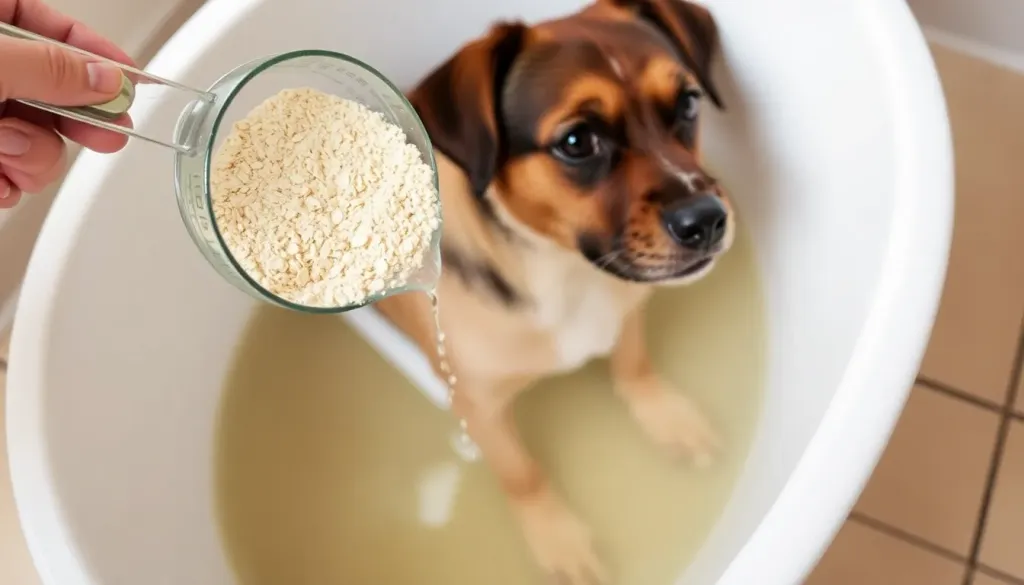
When my rescue terrier developed multiple itchy patches, oatmeal baths became our weekly ritual. PetMD confirms that oatmeal contains anti-inflammatory compounds that calm irritated skin and reduce redness.
Preparation:
- Grind 1-2 cups plain, unflavored oatmeal (not the sugary instant packets!) into a fine powder using a blender or food processor
- Mix with lukewarm water (never hot—this increases inflammation)
- Create either a paste for spot treatment or fill a tub for full-body soaking
Application:
- Soak your dog for 10-15 minutes
- Gently massage the oatmeal water over the hot spot
- Rinse thoroughly (residue can attract dirt)
- Pat dry completely—moisture is the enemy!
Frequency: 2-3 times per week until symptoms improve
4. Chamomile or Green Tea Rinse (Natural Anti-Inflammatory)
These gentle tea rinses offer natural anti-inflammatory properties that soothe irritated skin without harsh chemicals.
Preparation:
- Steep 3-4 tea bags in 2 cups boiling water
- Allow to cool completely (test on your wrist first)
- Remove tea bags
Application:
- Soak a clean, soft cloth in the cooled tea
- Gently press against the hot spot for 5-10 minutes
- Let air dry (no rubbing)
- Repeat 2-3 times daily
According to holistic veterinary sources, the tannins in tea have astringent properties that help dry out weeping hot spots while reducing inflammation.
5. Apple Cider Vinegar Spray (Diluted Antibacterial)
⚠️ CRITICAL WARNING: Never apply apple cider vinegar to open, bleeding wounds. Only use on intact but itchy skin.
Preparation: Mix equal parts:
- Raw, unfiltered apple cider vinegar (with “the mother”)
- Filtered water
Application:
- Pour into a clean spray bottle
- Lightly mist itchy areas (avoiding eyes, ears, and open lesions)
- Allow to air dry
- Use 1-2 times daily
PetMD notes that diluted apple cider vinegar can help reduce bacteria and yeast, but discontinue immediately if you notice increased redness or if your dog shows signs of discomfort.
6. CBD Salve (Topical Anti-Inflammatory and Pain Relief)
I was skeptical about CBD products until my vet recommended a quality topical salve for my older dog’s recurring hot spots. Research shows CBD offers:
- Anti-inflammatory properties
- Antimicrobial effects
- Analgesic (pain-relieving) benefits
- Immune system balancing
- Accelerated wound healing
What to Look For:
- Full-spectrum hemp extract with naturally occurring CBD
- Organic ingredients like Manuka honey, beeswax, shea butter
- Third-party lab testing for purity and potency
- No THC (toxic to dogs)
Application: Apply a thin layer to the affected area 2-3 times daily. Use the E-collar to prevent licking for at least 15 minutes while it absorbs.
Natural Supplements for Skin Health (Internal Support)
1. Omega-3 Fatty Acids (Fish Oil) — The Foundation of Healthy Skin
This is the single most important supplement I give my dogs year-round for skin health. According to the AKC and veterinary nutritionists, omega-3 fatty acids:
- Maintain healthy skin barrier function
- Reduce systemic inflammation
- Improve coat shine and skin elasticity
- Support immune response
- May reduce allergic reactions that trigger hot spots
Dosage Guidelines:
| Dog Weight | EPA + DHA (combined) Daily Dose |
|---|---|
| Under 15 lbs | 150-300 mg |
| 15-30 lbs | 300-600 mg |
| 30-50 lbs | 600-900 mg |
| 50-75 lbs | 900-1,200 mg |
| 75-100 lbs | 1,200-1,500 mg |
My Recommendation: Use high-quality fish oil specifically formulated for dogs. Human supplements may contain additives unsuitable for pets. Always consult your veterinarian before starting supplements to ensure proper dosing and avoid interactions with medications.
2. Vitamin E (Antioxidant Itch Relief)
Vitamin E helps break the itch-scratch cycle by providing antioxidant support to stressed skin cells.
Application:
- Use a vitamin E capsule (check with your vet for appropriate dosage)
- Poke a small hole in the capsule
- Squeeze one drop directly onto your dog’s food daily
The AKC notes this simple addition can support skin healing from the inside out.
What to NEVER Use on Hot Spots (Critical Warnings)
Human Medications Are Dangerous
Never apply:
- Neosporin or other antibiotic ointments
- Hydrocortisone cream
- Vaseline or petroleum jelly
According to Pawlicy and veterinary toxicology sources, these products:
- Encourage excessive licking (making hot spots worse)
- Can be toxic if ingested in large amounts
- May contain ingredients harmful to dogs
- Create a moisture barrier that prevents healing
I learned this the hard way when I initially reached for my own first-aid cream—my vet was horrified and explained dogs’ licking instinct makes most human topicals dangerous.
Other Hazards
| Item | Why It’s Dangerous | Source |
|---|---|---|
| Bandages/wraps | Trap moisture and bacteria, prevent air circulation | PetMD |
| Undiluted apple cider vinegar | Burns raw skin, causes severe irritation | AKC |
| Excessive coconut oil (internal) | Digestive upset, pancreatitis risk in large amounts | PetMD |
| Aspirin paste | Potential toxicity if licked off, irritation | Veterinary research |
| Heavy creams/ointments | Encourage licking, clog pores, trap infection | Multiple sources |
Complete Serving Guide: Natural Hot Spot Treatment Protocol
Week 1: Active Treatment Phase
Daily Routine:
Morning:
- Gently clean hot spot with diluted chlorhexidine or saline (pat dry)
- Apply aloe vera gel or CBD salve (thin layer)
- Put on E-collar
- Give omega-3 supplement with breakfast
Midday:
- Check hot spot for improvement or worsening
- Chamomile tea compress for 5-10 minutes
- Let air dry completely
Evening:
- Clean area again (if needed)
- Apply coconut oil topically OR give internal dose with dinner
- Second omega-3 dose (if recommended by vet)
- E-collar remains on overnight
Every 2-3 Days:
- Oatmeal bath (10-15 minutes)
- Trim any regrown fur around the lesion
Week 2-3: Healing Phase
As the hot spot dries out and stops oozing (typically 3-7 days with proper treatment), reduce frequency:
- Topical applications: 1-2 times daily
- Continue omega-3 supplements indefinitely for skin health
- Gradual E-collar removal (supervised time without it)
- Monitor closely for any scratching/licking
Comparing Natural vs. Conventional Hot Spot Treatments
| Treatment Aspect | Natural Remedies | Conventional Veterinary Treatment |
|---|---|---|
| Speed of relief | 3-7 days for mild cases | 24-72 hours (antibiotics/steroids) |
| Best for | Minor, early-stage hot spots | Severe, infected, or rapidly spreading lesions |
| Side effects | Minimal (if used correctly) | Potential: digestive upset, increased thirst, long-term steroid effects |
| Cost | $15-50 for supplies | $100-300+ (vet visit, medications, follow-up) |
| Addresses root cause | Limited (symptom management) | Can diagnose and treat underlying conditions |
| When to use | Small lesions, preventive care | Large lesions, fever, multiple spots, recurring issues |
My experience: Natural remedies work beautifully for the occasional minor hot spot, but when my rescue developed an infected hot spot with pus and fever, antibiotics were absolutely necessary. There’s no shame in seeking veterinary care—it’s often the fastest path to relief.
Prevention: How I Keep My Dogs Hot-Spot-Free
Daily Habits
1. Thorough Drying After Water Exposure
- After baths, swimming, or rainy walks, I use a high-velocity dog dryer
- Pay special attention to thick-coated areas (chest, armpits, behind ears)
- My Golden Retriever’s undercoat can stay damp for hours without proper drying
2. Regular Grooming
- Brush 3-4 times weekly to prevent mats
- Professional grooming every 6-8 weeks for heavy-coated breeds
- Check for skin abnormalities during brushing
3. Flea Prevention
- Year-round flea/tick prevention (consult your vet for best products)
- Even one flea can trigger allergic dermatitis
Dietary Support
Anti-Inflammatory Diet Components:
- High-quality protein (named meat as first ingredient)
- Limited ingredient formulas if allergies suspected
- Omega-3 supplementation (fish oil)
- Probiotics for immune health
- Fresh vegetables (carrots, green beans) for fiber and vitamins
I switched my allergy-prone terrier to a limited ingredient salmon-and-potato formula, and his skin issues decreased dramatically.
Environmental Management
- HEPA air filters in our home (reduces airborne allergens)
- Hypoallergenic bedding washed weekly in fragrance-free detergent
- Regular vacuuming to minimize dust mites and pollen
- Paw washing after outdoor walks to remove allergens
When to See the Vet Immediately
Natural remedies are wonderful, but I never hesitate to call our vet when I see:
- Rapid spreading (hot spot doubles in size within 24 hours)
- Signs of infection:
- Yellow/green pus
- Foul odor
- Warm to touch
- Swelling beyond the immediate area
- Fever (normal dog temperature: 101-102.5°F)
- Lethargy or loss of appetite
- Multiple hot spots appearing simultaneously
- No improvement after 48 hours of home treatment
- Recurring hot spots in the same location
According to PetMD, recurring hot spots often indicate underlying issues like:
- Food allergies requiring elimination diet trials
- Atopic dermatitis (environmental allergies) needing long-term management
- Hypothyroidism or other hormonal imbalances
- Behavioral issues requiring training or anxiety medication
Frequently Asked Questions
How long does it take for a hot spot to heal naturally?
With proper treatment, a minor hot spot typically shows significant improvement within 3-5 days and complete healing within 7-14 days. When my dogs develop small hot spots (smaller than a quarter), I see the oozing stop within 24-48 hours of starting treatment, but complete fur regrowth takes several weeks.
However, healing time depends on several factors:
- Size and severity of the initial lesion
- Consistency of treatment (using E-collar, preventing licking)
- Underlying cause (hot spots from allergies may recur without addressing the root issue)
- Your dog’s overall health and immune function
If you don’t see improvement within 48 hours, or if the hot spot worsens despite treatment, veterinary intervention is necessary. My Golden’s first hot spot seemed to heal, then came back worse two days later—turns out he had a bacterial infection requiring antibiotics.
Can I use coconut oil and aloe vera together on the same hot spot?
Yes, but not simultaneously. I alternate between remedies to avoid over-saturating the skin, which can slow healing and encourage licking. Here’s my rotation schedule:
Morning: Aloe vera gel (anti-inflammatory, cooling)
Evening: Coconut oil (antibacterial, moisturizing)
This approach gives each remedy time to absorb and work without creating a thick, greasy layer that attracts dirt or promotes bacterial growth. According to veterinary dermatologists, hot spots heal best when kept clean and relatively dry—not soaked in multiple layers of products.
Alternative strategy: Use aloe vera during the acute, inflamed phase (first 2-3 days), then switch to coconut oil during the healing/skin regeneration phase.
Will my dog’s fur grow back after a hot spot heals?
Yes, in most cases, fur fully regrows once the hot spot heals completely—though it may take 4-8 weeks depending on your dog’s breed and coat type. My Labrador’s fur grew back within a month, while my Golden Retriever’s thicker double coat took nearly two months to fill in completely.
Factors affecting regrowth:
- Depth of skin damage: Superficial hot spots heal without scarring; deep lesions may leave hairless patches
- Repeated trauma: Hot spots in the same location can damage hair follicles permanently
- Breed: Fast-growing coats (Poodles, Labradoodles) regrow faster than slow-growing breeds (some terriers)
Signs of normal healing:
- Thin, fine “puppy fur” appears first
- Gradually thickens and matches surrounding coat
- May initially grow in slightly different color (usually normalizes)
If fur doesn’t regrow after 2-3 months, consult your vet—this could indicate follicle damage or ongoing skin inflammation.
Is apple cider vinegar safe for hot spots, or will it sting?
Apple cider vinegar (ACV) can sting if applied to raw, open wounds, which is why I only use it on itchy, intact skin—never on actively oozing hot spots. According to PetMD, the acidic nature of ACV disrupts bacterial and yeast growth, making it helpful for preventing hot spots or treating mild itchiness.
Safe use guidelines:
- Always dilute 50/50 with water (never use undiluted)
- Test on healthy skin first to check for sensitivity
- Avoid eyes, ears, nose, and genitals
- Only apply to closed lesions (no bleeding or weeping)
- Discontinue if you see increased redness or your dog shows discomfort
When I use ACV:
- Preventive spritz after outdoor activities (especially if my dogs have been swimming)
- Mild itchy patches that haven’t progressed to hot spots
- Post-healing maintenance once the hot spot has fully closed and scabbed over
When I avoid ACV:
- Active, oozing hot spots (use aloe vera or chamomile tea instead)
- Dogs with extremely sensitive skin
- Any area my dog can easily lick off
If your dog reacts negatively—pulling away, whining, or showing signs of pain—the ACV is either too strong or being applied to damaged skin. Switch to gentler remedies like cooled chamomile tea or pure aloe vera gel.
Final Thoughts: A Balanced Approach to Hot Spot Care
After years of managing hot spots in my multi-dog household, I’ve learned that natural remedies work best as part of a comprehensive care strategy, not as a replacement for veterinary medicine. For minor, early-stage hot spots caught quickly, the combination of proper cleaning, natural anti-inflammatories like aloe vera and coconut oil, omega-3 supplementation, and preventing further trauma with an E-collar usually resolves the issue within a week.
But I never ignore warning signs that indicate a vet visit is necessary. Hot spots can escalate frighteningly fast—what starts as a quarter-sized red patch can become a hand-sized infected wound within 24 hours if your dog continues licking and scratching. The peace of mind that comes from a professional diagnosis, especially for first-time hot spots or severe cases, is invaluable.
My personal protocol:
- Catch it early through daily coat checks during grooming
- Start natural treatment immediately (clean, trim, apply remedies, E-collar)
- Monitor closely for 48 hours
- Call the vet if no improvement or any worsening
- Address underlying causes (allergies, parasites, anxiety)
- Maintain prevention through diet, supplements, and grooming
The natural remedies in this guide—backed by sources like the American Kennel Club, PetMD, and veterinary research—have saved my dogs from unnecessary discomfort and saved me from multiple emergency vet visits. But they work best when you stay vigilant, act quickly, and know when professional help is needed.
Your dog’s skin health is a window into their overall wellness. Those omega-3s you give today, the few extra minutes spent drying thoroughly after a bath, the quality protein in their food—these preventive measures create resilient skin that resists hot spots before they start. And when hot spots do appear (because they will, especially in allergy-prone or thick-coated dogs), you now have a natural toolkit to provide relief while working with your veterinarian for the best possible outcome.
Stay observant, stay proactive, and trust your instincts when something seems wrong. Our dogs depend on us to be their advocates and caregivers—and that’s a responsibility I take seriously every single day.