How to Stop Puppy [Biting](/how-to-stop-leash-biting/) Fast: 7 Pro Tips
 Fast: 7 Pro Tips](/images/how-to-stop-puppy-biting.webp)
Puppy biting and nipping is a completely normal behavior that can be redirected through consistent bite inhibition training, positive reinforcement, and environmental management techniques. Most puppies naturally learn to control their bite pressure between 8-16 weeks old, but with structured training using redirection, yelping sounds, and reward-based methods, you can stop this behavior within 2-4 weeks of consistent practice.
⚠️ Training Disclaimer
While the training methods described in this article are widely recommended by certified dog behaviorists and trainers, every puppy is unique. If your puppy shows signs of aggressive biting (breaking skin, growling, stiff body posture) rather than playful nipping, consult with a certified professional dog trainer (CPDT-KA) or veterinary behaviorist immediately. The techniques here are designed for normal puppy mouthing behavior, not aggression.
Understanding Why Puppies Bite and Nip
Before we dive into solutions, let’s understand the psychology behind this behavior. Patience is key! Your puppy isn’t trying to be mean—this is completely normal developmental behavior.
The Natural Causes of Puppy Mouthing
Puppies explore the world with their mouths. Just like human babies put everything in their mouths, puppies use biting to learn about their environment, test boundaries, and interact socially. According to the American Kennel Club (AKC), puppies typically engage in mouthing behavior for several key reasons:
- Teething discomfort (3-6 months of age creates intense gum pain)
- Play behavior (how they interacted with littermates)
- Attention-seeking (they’ve learned biting gets a reaction)
- Overstimulation or overtiredness (lack of impulse control)
- Natural predatory instincts (movement triggers chase-and-bite responses)
Why Does My Puppy Bite My Feet and Hands?
Movement triggers prey drive. When you walk past your puppy, your moving feet and swinging hands activate their natural chase instincts. This is especially common with herding breeds (Border Collies, Australian Shepherds, Corgis) who were bred to nip at livestock heels.
You can do this! Understanding that this is instinctive—not malicious—helps you approach training with the right mindset.
How Puppies Naturally Learn Bite Inhibition
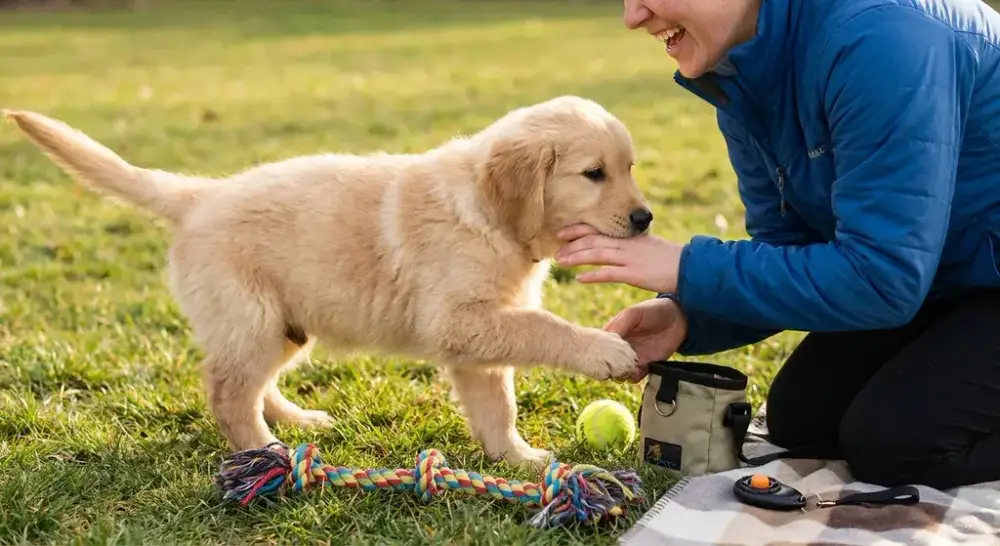
In a perfect world, puppies learn bite inhibition (controlling jaw pressure) from their mothers and littermates between 4-8 weeks old. Here’s how it works naturally:
| Age Range | Natural Learning Process | What Happens |
|---|---|---|
| 3-4 weeks | Play fighting with siblings | Puppies bite each other during play |
| 4-6 weeks | Feedback from littermates | When one bites too hard, the other yelps and stops playing |
| 6-8 weeks | Mother dog corrections | Mom growls or removes herself when bitten too hard |
| 8-12 weeks | Fine-tuning pressure | Puppies learn graduated bite pressure control |
The problem: Many puppies are separated from their litters before this learning is complete, or some puppies need additional reinforcement. That’s where YOU come in as the teacher!
The 7-Step Action Plan: How to Stop a Puppy from Biting and Nipping
Let’s get practical! Here’s your comprehensive, step-by-step training protocol. Follow these methods consistently, and you’ll see improvement within days.
Step 1: The “Ouch!” Technique (Bite Inhibition Training)
This mimics how littermates teach each other. According to PetMD, this is the foundation of all puppy bite training.
How to execute:
- When your puppy bites you, immediately say “OUCH!” or “OW!” in a high-pitched, sharp tone (like a yelping puppy)
- Immediately stop all play and interaction
- Turn away from your puppy or stand up (removing attention)
- Ignore your puppy for 10-30 seconds (no eye contact, no talking)
- Resume play only when puppy is calm
- Repeat every single time teeth touch skin
Critical tip: The yelp should sound genuinely hurt and surprised—not angry. You’re teaching “That hurt me!” not “You’re in trouble!”
Consistency is everything here. Every family member must use this exact technique every time.
Step 2: Redirection to Appropriate Chew Items
Never leave your puppy without a legal outlet for their biting needs. Puppy biting training redirect techniques are essential for fast results.
The redirection protocol:
- Keep approved chew toys within arm’s reach at all times
- The moment teeth touch your skin, say “Ouch!” then immediately offer a toy
- When puppy takes the toy, praise enthusiastically: “YES! Good bite!” or “Good choice!”
- Engage in play with the toy for 30-60 seconds to reward the correct behavior
- Rotate toys daily to maintain novelty and interest
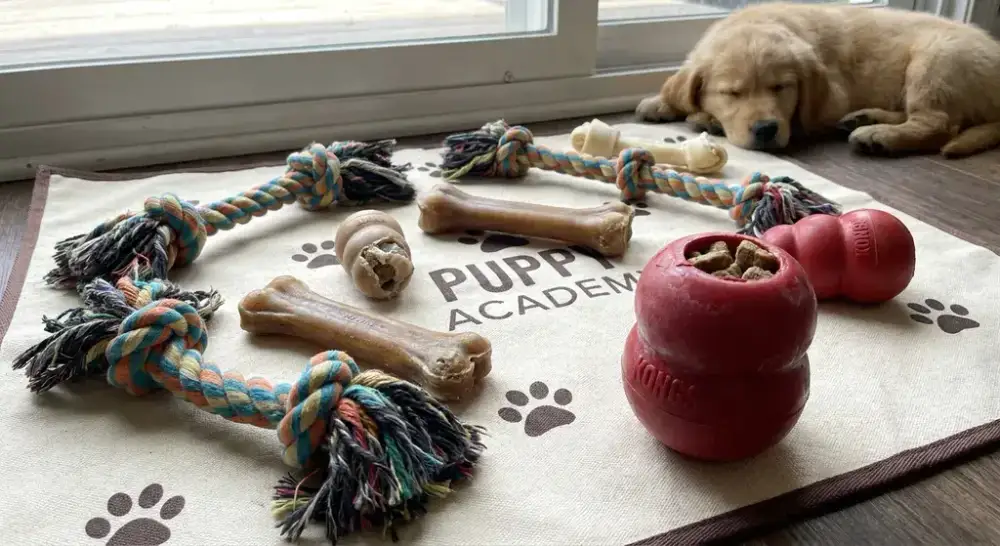
Best redirection toys for teething puppies:
- Frozen Kong stuffed with wet food (numbs gums, provides long engagement)
- Rope toys soaked in water and frozen (soothing on inflamed gums)
- Rubber teething rings (varied textures for exploration)
- Bully sticks or yak chews (long-lasting, satisfying to chew)
- Soft plush toys with squeakers (for gentle mouthing)
Pro tip: Have a “puppy nipping emergency kit” in every room—a basket with 3-4 toys ready to grab instantly.
Step 3: The Time-Out Method (Removing Reinforcement)
This teaches that biting makes fun things go away. This is negative punishment in behavioral psychology—removing something desirable (your attention) when unwanted behavior occurs.
Time-out implementation:
- When puppy bites despite redirection, calmly say “Too bad” or “All done”
- Immediately leave the room or place puppy in a puppy-proofed area
- Time-out duration: 30-60 seconds only (not longer—they’ll forget why)
- Return and resume interaction only when puppy is calm
- If biting resumes within 2 minutes, repeat time-out
Critical rules for effective time-outs:
- No angry tone or physical corrections
- Don’t chase the puppy to implement time-out
- Time-out area should be boring but safe (not the crate—that’s their happy place)
- Consistency matters more than duration
Step 4: Stop Puppy Nipping Fast with Enrichment Activities
Tired puppies bite less. Mental and physical exhaustion dramatically reduces nipping behavior because puppies have better impulse control when their needs are met.
Daily enrichment schedule to prevent biting:
Morning (8:00 AM - 9:00 AM):
- 10-minute training session (basic commands like “Sit,” “Down,” “Stay”)
- 15-minute supervised outdoor exploration
- Puzzle feeder for breakfast (makes eating mentally engaging)
Midday (12:00 PM - 1:00 PM):
- 20-minute play session with appropriate toys
- 10-minute sniff walk (letting puppy explore at their pace)
- Frozen Kong for alone time
Afternoon (3:00 PM - 4:00 PM):
- 5-minute trick training (builds impulse control)
- Hide-and-seek games indoors
- Tug-of-war with strict rules (releasing on command)
Evening (6:00 PM - 7:00 PM):
- 20-30 minute walk
- Calm petting session (teaching to accept gentle touch)
- Chew time before bed
Remember: A puppy needs 15-20 hours of sleep per day! Overtired puppies become “bitey” because they lack impulse control.
Step 5: Teach Incompatible Behaviors (The “Sit for Attention” Protocol)
You can’t sit and bite simultaneously. This is the brilliance of training incompatible behaviors.
Implementation steps:
- Before petting or giving attention, require puppy to “Sit”
- Mark the sitting behavior: “Yes!” or use a clicker
- Reward with calm petting (not exciting roughhousing)
- If puppy stands and tries to nip, withdraw attention immediately
- Wait for puppy to sit again before resuming interaction
This teaches: “Calm behavior earns attention, biting loses attention.”
Advanced version—“Say Please” program:
- Puppy must sit before: meals, going outside, getting toys, receiving pets
- Builds impulse control across all contexts
- Typically reduces nipping by 60-70% within one week
Step 6: Manage the Environment (Prevention Setup)
Success comes from preventing the behavior, not just correcting it. Environmental management is your secret weapon.
Prevention strategies:
| Trigger | Management Solution |
|---|---|
| Biting feet while walking | Keep toy in pocket, toss ahead when puppy approaches; teach “Find it” game as redirection |
| Biting during petting | Start with 3-second pet sessions; stop before puppy gets overstimulated |
| Biting during play | Use tug toys to keep teeth off skin; have two toys to swap when one is in mouth |
| Biting pant legs/shoelaces | Spray with bitter apple deterrent; wear long, loose clothing that’s less fun to grab |
| Overstimulated evening biting | Implement “reverse time-outs” (you leave before puppy gets wild) |
The “Umbilical Cord” technique:
- Attach puppy to you with a 6-foot leash during supervised time
- You can immediately respond to biting attempts
- Prevents puppy from building momentum in chase games
- Builds impulse control near you
Step 7: Reinforce Gentle Mouth Behavior
Actively reward when your puppy is being gentle! Many owners only correct biting but forget to reinforce good choices.
The gentle mouth training protocol:
- Offer your hand flat (palm up) near puppy’s mouth
- If puppy sniffs or licks (without biting), immediately mark: “Gentle! Yes!”
- Deliver a high-value treat with your other hand
- Repeat 5-10 times per training session
- Gradually extend hand closer to puppy’s mouth
- Eventually, puppy learns: “Licking hands = treats, biting hands = loss of attention”
You’re teaching an alternative behavior that’s MORE rewarding than biting!
Special Scenarios: Advanced Nipping Solutions
Puppy Bites During Leash Walking
The problem: Puppy grabs the leash, bites ankles, or jumps at your legs during walks.
The solution:
- Stop moving immediately when biting starts (movement reinforces the behavior)
- Become “a tree”—stand still, arms crossed, no eye contact
- Wait for puppy to release and sit or stand calmly
- Mark the calm behavior: “Yes! Good!”
- Resume walking only when calm
- Carry a tug toy and offer every 20-30 steps preemptively
Alternative approach: Practice “penalty yards”—when puppy bites leash, walk backward 10 feet, then resume forward progress. This teaches biting delays getting to fun destinations.
Herding Breed Ankle Biters
Herding breeds (Corgis, Australian Shepherds, Border Collies, Shelties) have intense nipping instincts.
Specialized protocol:
- Never run or move quickly around these puppies (triggers herding drive)
- Teach “Target” training—puppy touches a target stick instead of heeling ankles
- Provide herding-substitute activities (pushing balls, “herding” remote-control cars)
- Use baby gates to control space rather than letting puppy chase family members
- Enroll in herding instinct classes if available (controlled outlet for the drive)
These breeds need jobs! The more you channel the instinct appropriately, the less they’ll practice on your ankles.
Over-Arousal Biting (The “Puppy Witching Hour”)
Many puppies have an evening “witching hour” (usually 7-9 PM) where biting intensifies dramatically.
Why it happens: Puppies get overtired but fight sleep, leading to hyperactivity and loss of impulse control (exactly like cranky toddlers).
The solution—structured calming routine:
- 6:30 PM: Last high-energy play session or walk
- 7:00 PM: Calm activities only (sniff games, puzzle toys, frozen Kongs)
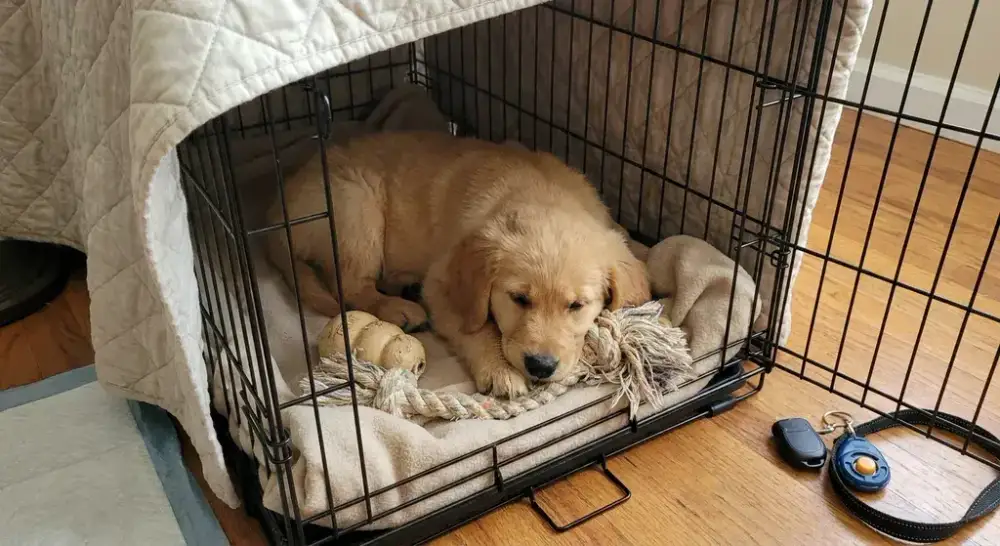
- 7:30 PM: Enforce nap in crate or quiet room with chew item
- Do not engage if puppy has a “freak out”—overtired puppies need sleep, not play
Patience is key! Many owners accidentally reinforce witching hour by giving attention during crazy behavior.
What NOT to Do: Common Training Mistakes
Let’s address counterproductive techniques that can make biting worse or damage your relationship with your puppy.
❌ Never Use Physical Punishment
Don’t:
- Hit, slap, or “bop” your puppy on the nose.
- Pin your puppy down (alpha rolls).
- Grab your puppy’s muzzle or hold their mouth closed.
- Scruff shake.
Why it fails: Physical corrections teach your puppy to fear your hands. Since your hands are the main tools for petting, feeding, and grooming, causing pain or fear will lead to defensive aggression. Instead of learning not to bite, they learn that human hands are dangerous.
❌ Using Hands as Toys
Don’t:
- Wrestle with your puppy using your bare hands.
- Wiggle your fingers to entice play.
- Pull your hands away rapidly during nipping (this triggers chase instinct).
Why it fails: If you play with your hands, you are teaching the puppy that hands are chew toys. Keep a clear boundary: hands are for gentle petting and feeding; toys are for biting.
❌ Inconsistent Rules
Don’t:
- Let the puppy mouth your hands “sometimes” when they are gentle.
- Allow one family member to play rough while forcing others to enforce rules.
Why it fails: Puppies need absolute consistency. If nipping is allowed 10% of the time, they will keep trying it 100% of the time. Every person in the household must follow the same protocols.
Frequently Asked Questions
How long does it take to stop a puppy from biting?
With 100% consistency across all family members, you will see a significant reduction in bite frequency and pressure within 2 weeks. Most puppies completely stop playful biting by 4-6 weeks of training. Remember, teething (which ends around 6 months) will keep the urge alive, so continue providing high-quality chew toys!
Why does my puppy bite harder when they are tired?
Just like human toddlers, puppies lose their ability to control their impulses when they are overtired or overstimulated. If your puppy goes on a biting frenzy and ignores redirection, it is usually a sign they need a structured nap in a quiet space or crate.
When does puppy biting become actual aggression?
Normal puppy biting is accompanied by loose, wiggly body language, play bows, and a relaxed face. Aggressive biting involves a stiff body, showing growls that are low and intense, lip curling, and snapping with the intent to harm. If you suspect your puppy is showing true aggression, contact a veterinary behaviorist immediately.
Conclusion
Teaching your puppy to stop biting is all about patience, consistency, and providing appropriate legal outlets. Remember to reward the good behaviors, redirect the bad ones, and stay calm. Patience is key, you can do this! With time, your nippy puppy will grow into a gentle, well-behaved companion.